Attend our in-person Robotics & Math


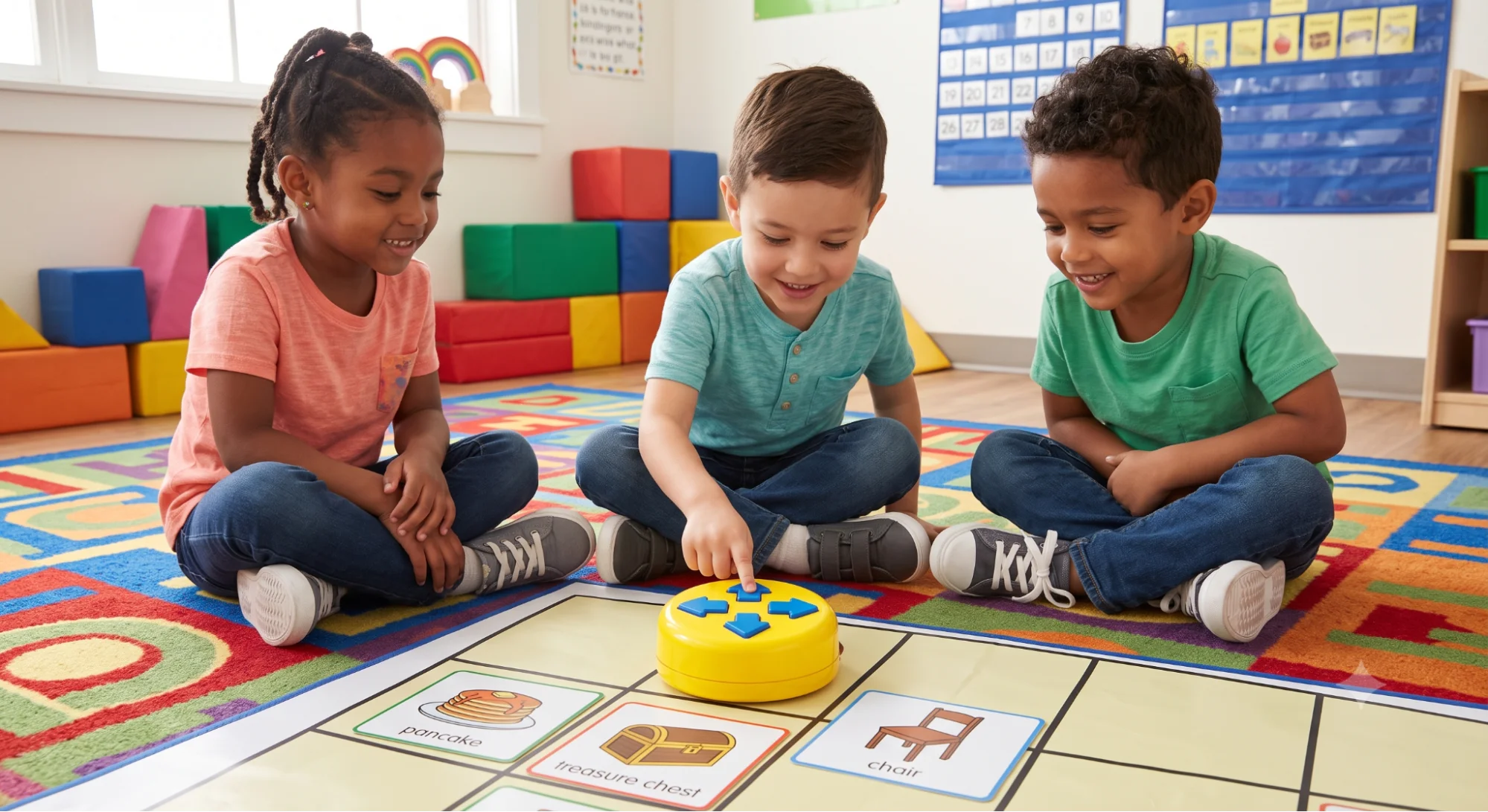
Picture a room full of five-year-olds giving "forward, forward, turn!" commands to a tiny floor robot, giggling every time it bumps a chair leg.
That giggle is the sound of a brain building sequencing skills, patience, and problem-solving, all before snack time.
Welcome to the wonderfully hands-on world of robotics for kindergarteners.
Why Robotics Belongs in the Pre-K Classroom (and Living Room)
Robotics for kids has a reputation for being complicated: wires, code, engineering degrees. But for early learners, robotics isn’t about building anything resembling a “real” robot. It’s about play-based STEM education that turns everyday curiosity into foundational thinking skills.
When a kindergartener presses buttons on a screen-free robot toy to guide it across a mat, or acts out being “the robot” for a friend, they’re quietly practicing:
- Sequential thinking — Breaking a big goal into small, ordered steps (the heart of coding logic).
- Resilience — Learning that a wrong move isn’t a failure, just information to try again.
- Collaboration — Discussing plans, taking turns, and building something together.
- Fine motor skills — Snapping pieces together, pressing buttons, and steering small robots.
- Confidence — Feeling capable and comfortable around technology from an early age.
Early childhood robotics programs like KIBO and Bee-Bot were built on decades of research showing that these foundational skills, planted early, tend to stick — long before a child ever writes a line of code.
What Robotics Actually Looks Like for Pre-K and Kindergarten
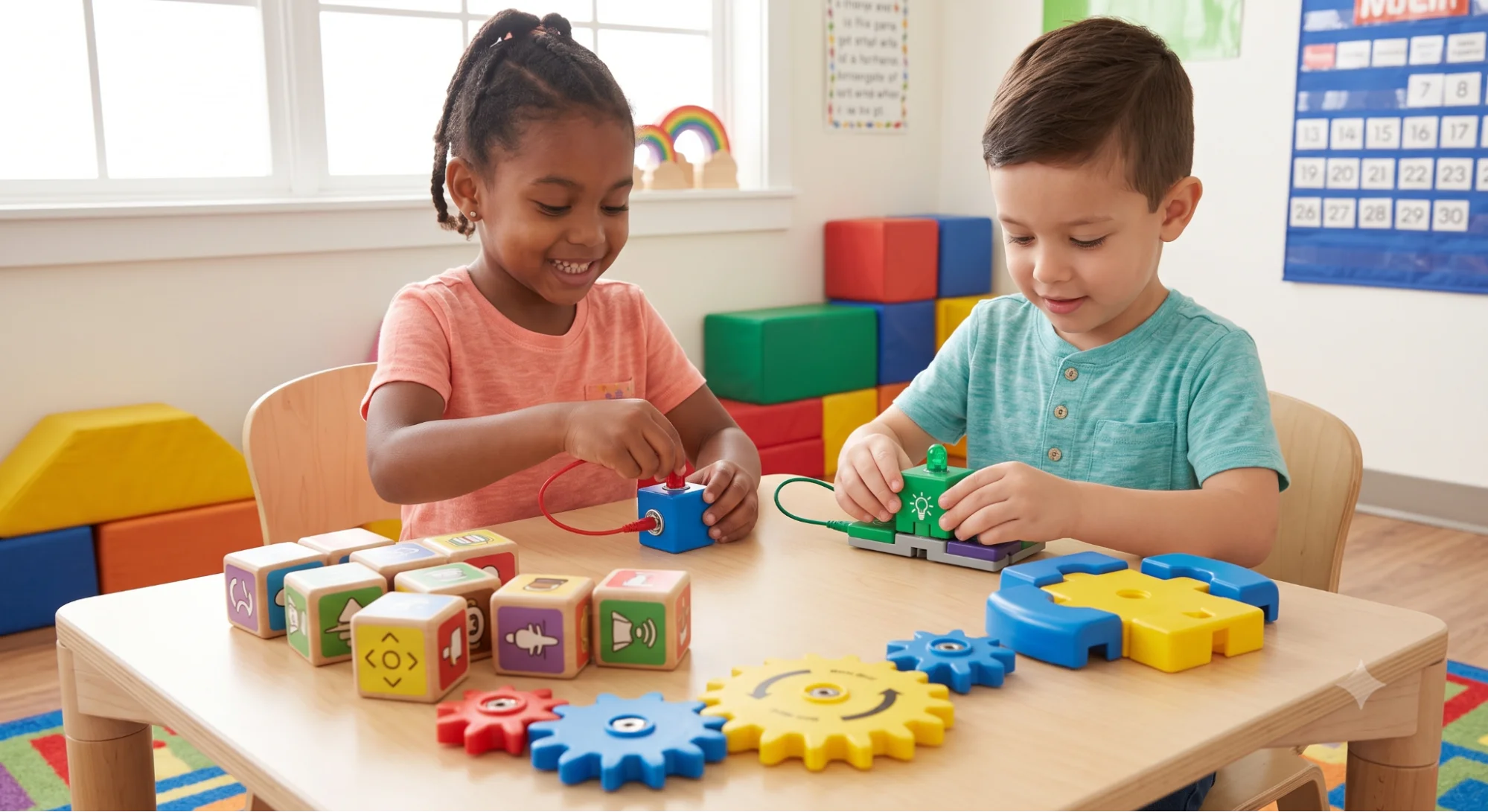
At this age, forget screens and syntax. The best robotics activities for kids are tactile, story-driven, and delightfully low-tech:
- Unplugged coding — Wooden blocks, cardboard, and arrow cards that teach direction and sequence.
- Screen-free robot toys — Large-button robots like Bee-Bot, Code-a-Pillar, or KIBO with oversized, toddler-friendly pieces.
- Story-based learning — Storybooks that weave in coding challenges, turning lessons into narrative adventures.
- Physical, imaginative play — Kids acting out robot movements themselves, no hardware required.
This gentle, play-first approach is exactly why robotics for kindergarteners doesn’t need a big budget or a computer lab, just some imagination, a few props, and an adult willing to say “beep boop” without embarrassment.
Want your child to try robotics hands-on? Explore Moonpreneur’s FREE in-person robotics workshops and discover an exciting STEM learning experience near you.
8 Fun Robotics Activities for Early Learners
Here’s a starter pack of classroom- and home-tested activities, ranging from zero-prep games to simple craft projects. Mix and match based on your group’s age and attention span.
| Activity | How It Works | Skills Built |
|---|---|---|
| 1. Robot or Not? Sorting Safari | Cut out pictures of robots, animals, and everyday objects. Kids sort them into "Robot" and "Not a Robot" piles, then explain their choices. | Classification Vocabulary Critical Thinking |
| 2. Be the Robot | One child is the 'programmer' and gives simple directional commands (forward, back, turn left) while a friend acts as the 'robot' and follows exactly. | Sequencing Listening Skills Teamwork |
| 3. Bee-Bot Treasure Hunt | Using a screen-free floor robot like Bee-Bot or Code-a-Pillar, kids program short move sequences to reach a toy treasure on a floor mat. | Early Coding Logic Spatial Awareness |
| 4. Cardboard Robot Buddies | Build a robot friend from recycled boxes, bottle caps, and pipe cleaners, then "program" its actions through pretend play. | Fine Motor Skills Creativity Storytelling |
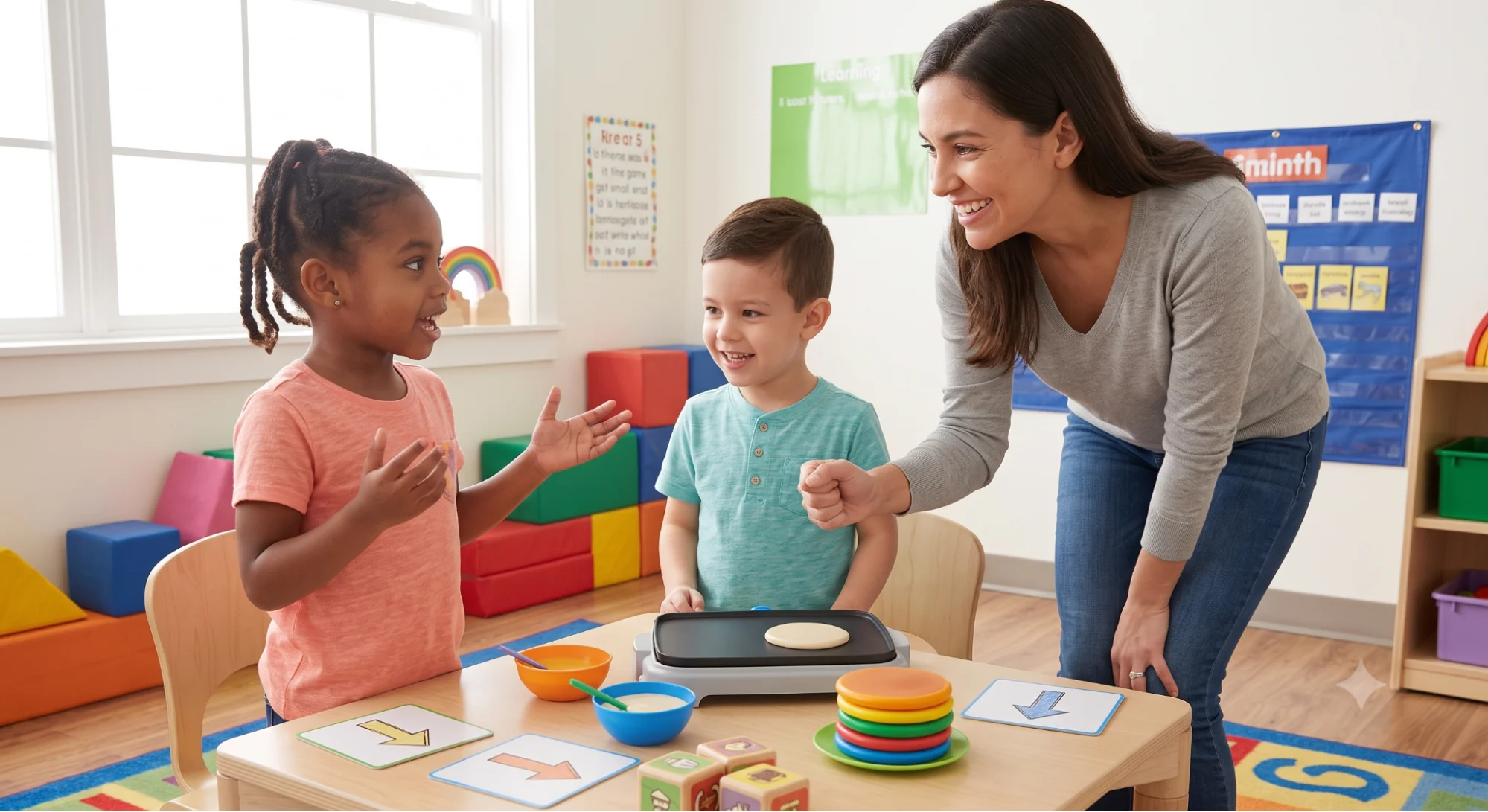
| 5. Pancake Algorithm | Kids give step-by-step instructions for making pancakes while a grown-up follows them exactly (even the silly mistakes!) to show why order matters. | Sequencing Cause and Effect |
| 6. Freeze-Dance Robot | Play music and have kids move like robots; when it stops, they freeze mid-command, reinforcing that robots only do what they're told. | Gross Motor Skills Listening Fun with Rules |
| 7. Shape Sorter Circuits | Use simple battery-and-bulb kits (with adult supervision) to light up a bulb, introducing the idea of circuits and power. | Basic Engineering Curiosity about Electricity |
| 8. Storytime Coding | Read a robot-themed picture book, then act out the robot character's journey using arrow cards (forward, turn, stop). | Reading Comprehension Sequencing |
Tip: rotate through two or three of these a week rather than cramming them all into one session, young attention spans thrive on short, repeated bursts of a new skill rather than one long lesson.
Tips for Introducing Robotics to Young Learners
Start with pure movement and vocabulary before adding any device.
A five-minute activity beats a thirty-minute one for this age group.
Celebrate the robot bumping into a wall as much as reaching the goal — that's the learning.
Weave in counting, letters, or colors so robotics reinforces what's already being taught.
Robotics shines as a group activity where kids negotiate turns and ideas together.
Common Mistakes Parents & Educators Should Avoid
A cardboard robot and a floor mat teach just as much as a $200 kit at this age.
If a child can't yet reliably count to five or follow two-step directions, simplify the activity first.
A frustrated five-year-old learns more from a five-minute break than from pushing through tears.
The goal isn't a perfect robot — it's a confident, curious kid.
Expand Your Knowledge With These Readings
- 25 Ways Robots Are Helping Humans in Daily Life, Work, and Healthcare
- How Automation and Robotics Are Transforming Airline Operations
- 25 Ways Robots Are Helping Humans in Daily Life, Work, and Healthcare
- The Unspoken Rules of Interacting with AI for Safer, Smarter Conversations
- How AI is Disrupting Education: A Black Swan Moment
- AI as Your Second Brain: Revolutionizing Decision-Making in the Digital Age
- The Unspoken Rules of Interacting with AI for Safer, Smarter Conversations
- AI Agents: Turning Clicks, Carts, and Conversions into a Trillion-Dollar Empire
- The Good, the Bad & the Unknown of AI
Conclusion
Robotics for kindergarteners isn’t about racing toward code and circuits; it’s about giving young learners a playful, hands-on doorway into logical thinking, creativity, and teamwork. Whether it’s a cardboard robot buddy, a game of “Be the Robot,” or a first press of a Bee-Bot’s arrow button, every small activity is quietly building the problem-solvers of tomorrow, one adorable, beeping step at a time.
Ready to bring robotics into your classroom or living room? Start with just one activity from this list today — your future engineer will thank you.
Moonpreneur is on a mission to disrupt traditional education and future-proof the next generation with holistic learning solutions. Its Innovator Program is building tomorrow’s workforce by training students in AI/ML, Robotics, Coding, IoT, and Apps, enabling entrepreneurship through experiential learning.
FAQs
Frequently Asked Questions
Is my child too young to start learning robotics? ▼
Not at all. Kindergarteners and even younger preschoolers can begin with screen-free, play-based robotics. At this age, it's less about 'real' robots and more about sequencing, cause and effect, and problem-solving through play.
Do we need expensive robot kits to get started? ▼
No. Many of the best early robotics activities use cardboard, craft supplies, or simple printed cards. Kits like Bee-Bot or KIBO are wonderful additions later, but they aren't required to start building foundational skills.
How much screen time does robotics for kids really involve? ▼
Surprisingly little. Many early childhood robotics experts recommend screen-free robots and unplugged coding games for this age group, saving screen-based programming apps for slightly older learners.
What skills does early robotics education actually build? ▼
Beyond STEM basics, robotics activities for kindergarteners strengthen sequencing, patience, resilience after mistakes, fine motor skills, teamwork, and confident problem-solving — skills that carry into every subject, not just science.