Attend our in-person Robotics & Math



Understanding Parenting Styles...
Before exploring why many parents are changing their approach, it is helpful to understand what the 5 parenting styles commonly discussed by child development experts, These include authoritative parenting, authoritarian parenting, permissive parenting, uninvolved parenting, and gentle parenting. Among these approaches, authoritative is often regarded as the gold standard because it combines clear boundaries with emotional support. Parents who follow this style encourage independence while maintaining consistent rules and expectations. This balance helps children develop confidence, responsibility, and resilience.
The Rise and Challenges of Gentle Parenting...
Gentle parenting focuses on understanding a child's emotions rather than relying on punishments or rewards. Parents aim to guide behaviour through empathy, connection, and respectful communication. While many families have experienced positive results, discussions about the pros and cons of gentle parenting have become increasingly common.
One of the main benefits of gentle parenting is that it helps children feel heard and understood. It encourages emotional intelligence, strengthens parent-child relationships, and reduces fear-based discipline. However, critics argue that some parents struggle to maintain boundaries while practicing the approach.
The growing gentle parenting backlash stems from concerns that some interpretations of the method prioritize feelings over accountability. Critics suggest that excessive negotiation can make it difficult for children to understand limits and consequences. These concerns have contributed to the discussion about the problems with gentle parenting approaches, such as structure and consistency..
Why Parents Are Embracing Natural Consequences
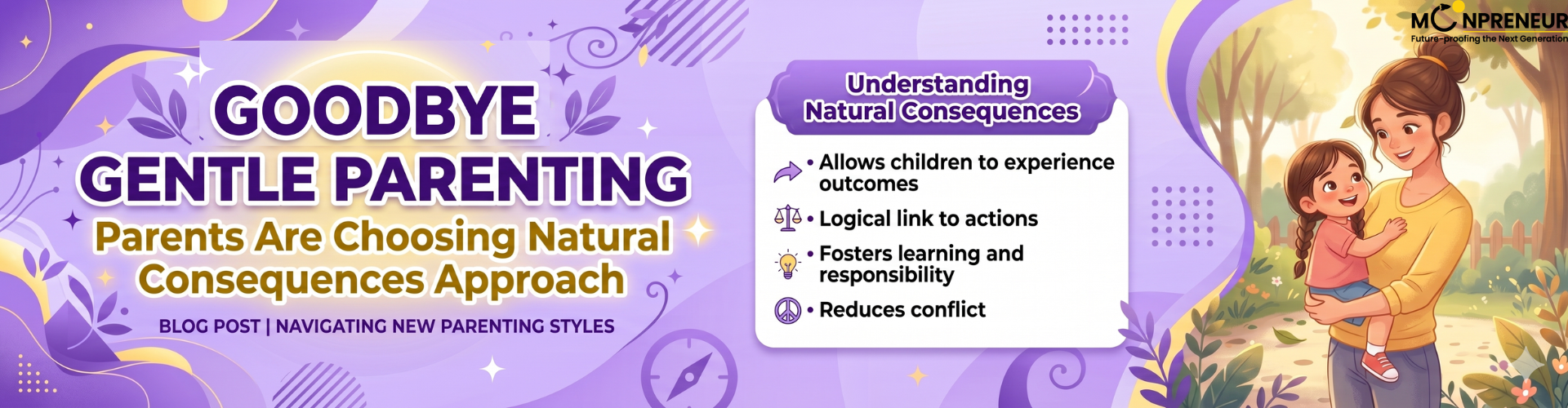
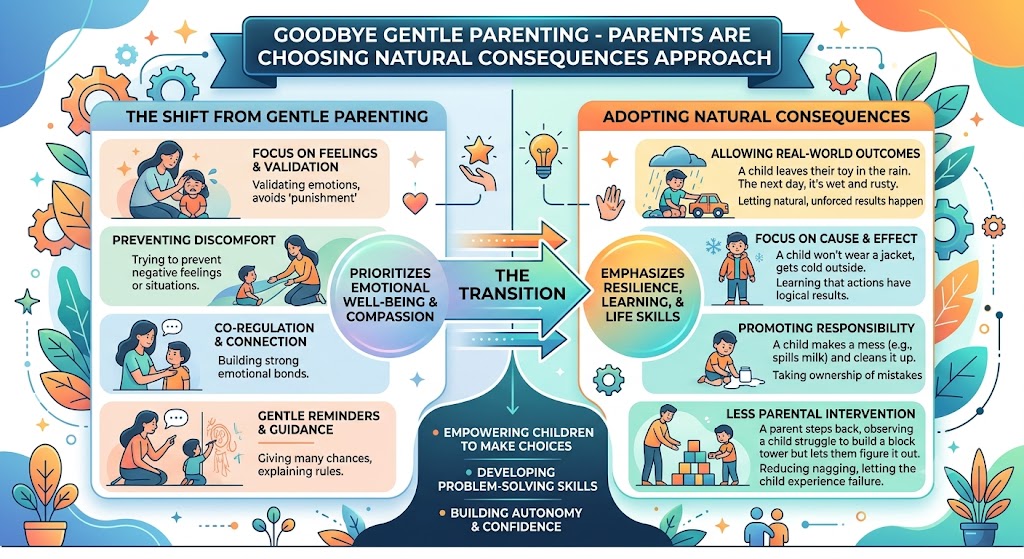
Natural consequences occur when children experience the direct results of their choices. Instead of imposing unrelated punishments, parents allow real-life outcomes to teach valuable lessons whenever it is safe to do so.
For example, if a child forgets to bring a school project, they may have to explain to their teacher. If they leave a favourite toy outside and it becomes damaged by the weather, they learn the importance of taking care of their belongings. These experiences help children connect actions with outcomes in meaningful ways.
Many parents believe this approach better prepares children for adulthood because life itself often operates through natural consequences. This philosophy becomes especially important when parenting through the teen years as adolescent need oppertunities to develop independence, decision making skills, and personal responsibility. Rather than shielding children from every mistake, parents guide them through the learning process and help them reflect on what they can do differently next time.
The Language Explosion Follows a Math Formula
At around 18 months, toddlers experience what linguists call a "vocabulary explosion." During this phase, they learn an average of one new word every two waking hours. Even if they aren't speaking them yet, their brains are logging them away like a hyper-efficient computer.."
Authoritative Parenting vs Gentle Parenting...
The debate surrounding authoritative parenting vs gentle parenting continues to gain attention among educators and child psychologists. Although both approaches value and emotional connection, there are important differences.
- Gentle parenting primarily focuses on empathy, emotional validation, and collaboration. Authoritative parenting shares these values but places greater emphasis on clear expectations and consistent consequences.
- When comparing gentle parenting vs authoriative parenting, many experts note that authoritative parents are comfortable setting firm boundaries while remaining responsive and supportive. The balance often helps children understand both freedom and responsibility.
- As a result, some families who once identified strongly with gentle parenting are transitioning toward authoritative methods. They appreciate the emotional awareness promoted by gentle parenting but want a stronger system of accountability and structure.
Gentle Parenting vs Traditional Parenting...
The discussion on gentle parenting vs traditional parenting often centers on discipline. Traditional parenting methods may rely more heavily on obedience, punishments, and strict authority. Gentle parenting, by contrast, prioritizes connection and understanding.
However, many modern parents no longer see the issue as an either-or choice. Instead, they are cheating hybrid approaches that combine emotional support with reasonable expectations. This middle ground allows children to feel respected while still learning responsibility and self-discipline.
What are the 5 C's of parenting?...
In the era of evidence-based parenting programs, the triple P (Positive Parenting Program) approach emerges as a strong foundation for families seeking practical guidance. The program emphasizes principles that help parents create a supportive and structured environment for their children.
What are the 5 C’s of parenting? The answer is often described as :
a)Care
b)Compassion
c)Consistency
d)Communication
e)and Commitment
These values encourage parents to nurture their children while maintaining expectations and healthy boundaries.
Consistency is particularly important when using natural consequences. Children learn best when expectations remain predictable, and parents respond calmly and fairly. Strong communication and compassion ensure that discipline becomes a learning opportunity rather than a source of fear or shame.
Psychological studies show that praising a child's inherent traits such as "You're a natural" or "You're so smart" can make children more risk-averse. They may become afraid of losing that label and avoid challenging tasks where failure is possible.
Instead, experts recommend praising effort and process. Comments like "I love how hard you worked on that puzzle" help children develop resilience, confidence, and a growth mindset that encourages them to embrace challenges and learn from mistakes.
What is the healthiest Style of Parenting...
A common question among families is, “What is the healthiest style of parenting?” Research consistency points toward authoritative parenting as one of the most effective approaches. It combines warmth, support, communication, and structure in a way that promotes both emotional well-being and personal responsibility.
Children raised by authoritative parents often demonstrate strong social skills, emotional regulation, academic success, and independence. The approach encourages healthy development while helping children understand boundaries and expectations.
Does Gentle Parenting Spoil Kids? ...
Another frequently asked question is Does gentle parenting spoil kids? The answer depends largely on how the approach is implemented. Gentle parenting itself does not encourage spoiling. In fact, its goal is to raise emotionally intelligent and respectful children.
However, when empathy is not balanced with boundaries, children may struggle to understand limits and consequences. This is one reason the discussion about the pros and cons of gentle parenting continues to grow. Successful parenting typically requires both compassion and accountability rather than focusing exclusively on one or the other.
What Is the 777 Rule for Parents? ...
Many parents have recently become interested in What is the 777 rule for parents. This guideline suggests focusing on different developmental stages of childhood. While interpretations vary, the concept generally highlights that children need different forms of guidance, connection, and independence as they grow.
The rule reminds parents that parenting is not static. Strategies that work during early childhood may need adjustment during adolescence. Understanding developmental changes helps parents remain flexible while continuing to provide support and structure.
Five Characteristics of a Good Parent ...
Regardless of parenting philosophy, there are several qualities that contribute to successful parenting. Among the 5 characteristics of a good parent are:
- Consistency,
- Patience,
- Empathy,
- Communication,
- And adaptability.
Good parents understand that mistakes are part of learning for both children and adults. They provide guidance without perfectionism and remain committed to helping their children grow into responsible, capable individuals.
Positive Parenting Tips For Everyday Success ...
Parents looking for practical strategies can benefit from several positive parenting tips. Setting clear expectations, following through consistently, listening actively, encouraging problem-solving, and allowing natural consequences when appropriate can help children develop independence and accountability. Equally important is modelling the behaviour you want to see. Children learn more from what parents do than from what they say. Demonstrating respect, responsibility, and emotional regulation provides powerful lessons that last a lifetime.
Final Thought ...
The growing movement of Goodbye Gentle Parenting does not necessarily signal the end of empathy-based parenting. Instead, it reflects a desire for greater balance. Many families are discovering that combining emotional support with natural consequences can help children develop resilience, accountability, and confidence.
As parenting philosophies continue to evolve, the most effective approach may not lie at either extreme. By blending the strengths of authoritative parenting with the emotional awareness of gentle parenting, parents can create an environment where children feel supported and prepared for the realities of life.
Looking for a comprehensive parenting guide to ensure you are on the right track? Explore a wealth of parenting wisdom and educational insights in Moonpreneur’s blogs. Additionally, you can join our programs that nurture the next generation of innovators. Book a free trial now!