Attend our in-person Robotics & Math



Old classrooms depended on static textbooks, chalkboards, and standardized, one-size-fits-all lesson plans. EdTech today provides a dynamic, accessible, and personalized learning environment for people of all ages.
“If implemented well, digital integration offers new opportunities for educators and learners.” 10 reasons why technology is good for education and why digital integration makes modern classrooms flourish.
Explore this reading: What is AI Literacy?
Why EdTech Matters: A Quick Overview
Search engines & reader key points:
- Adaptive software: Software that adapts to the learning pace of each child.
- Accessibility: Digital tools can help to overcome geographical, physical, and financial barriers to quality education.
- Future-Proofing: Exposure to digital platforms early on develops critical digital literacy skills for the workplace.
Explore this reading: Mouse Practice Games for Kids to Improve Computer Mouse Skills
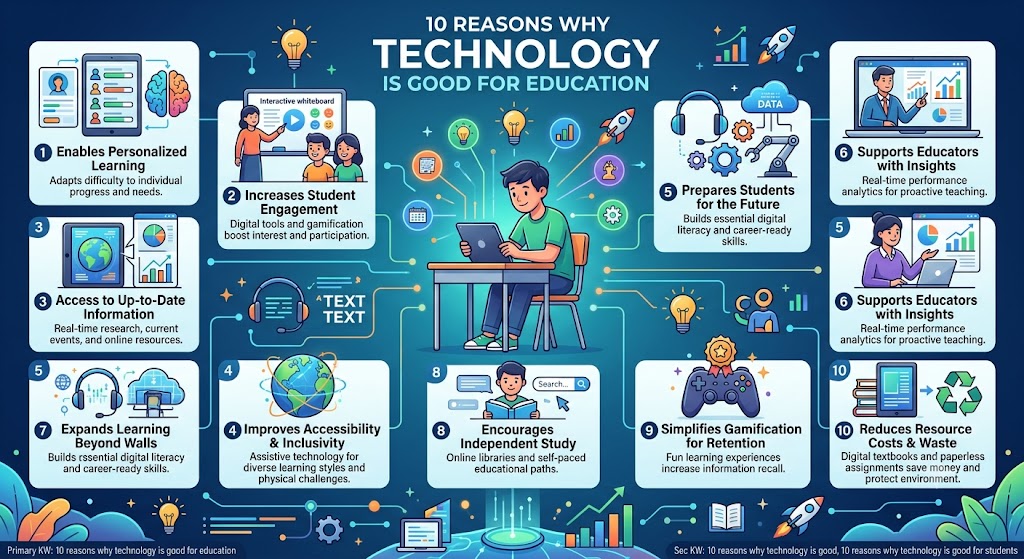
Let’s understand the 10 reasons why technology is good for education.
1. Delivers a Customized Learning Experience
Each student learns at their own pace and the technology used in adaptive learning adjusts the level of difficulty of the educational content according to the progress of each student. The ones that learn quickly will be given more advanced content to study, and the ones that are struggling will get reinforced material.
2. Boosts Interaction and Collaboration of the Learners
The students practice active learning with the help of interactive learning media such as e-quizzes, virtual laboratories, or game-like applications. Apart from that, they can also carry out group work using online resources such as Google Workspace or MS Teams, no matter what location they are located in.
3. Gives access to up-to-date information
Textbooks are out of date as soon as they are printed. Digital platforms allow teachers to bring current material into the classroom by accessing real-time scientific data, current news events and updated global research.
4. Enhances Accessibility in Education for All Students
Assistive technology (AT)—like voice synthesizers, programs that transcribe speech, closed captioning systems, and adjustable font sizes—is a means of enabling a variety of students to learn, whether they have different interests, level of intelligence, or disabilities.
5. Prepares Students for the Future Jobs Available
Digital literacy is an essential part of student life today. The knowledge of digital tools, fundamental programming, teamwork software, and internet ethics must be acquired as soon as possible.
6. Assists Teachers with Software Analytics
Learning management systems (LMS) offer data analytics. Therefore, instead of having to wait several months to receive mid-term grades, teachers can understand the barriers to their students’ learning process.
7. Promotes Education that Goes Beyond a Classroom
In distance e-learning and using virtual trips, students can have access to various educational experiences from anywhere in the world.
8. Promotes independent research and learning
Learners become independent by acquiring skills and knowledge that enables them to use the digital archives, academic databases, and video tutorials to perform their own searches for information on the Internet.
9. Improved gamification for greater retention
Using game mechanics like points, badges, progress trackers and leader boards on core subjects like math or reading keeps students engaged and actually retain a lot more information in the long run.
10. Saves paper waste and resource cost
Digital textbooks and online assignments and cloud storage decrease schools’ operating costs and reduce paper waste dramatically, enabling schools to adopt sustainable educational practices over time.
Explore this reading: Learning Coding, Robotics and Other Tech Hobbies for Kids
Broader Value: Why technology benefits society
Beside classroom wall there are 10 best reasons why technology is overall good for social development.
Explore this reading: How to Teach Data Science to Kids
Direct Impact on Student Growth
10 reasons why technology is good for students:
• Personalized Learning: The websites provide courses not found in their local school system, allowing students to dive into their areas of interest.
• Inspiration: games give immediate feedback which allows children to acquire new knowledge and learn from their mistakes even when their peers are present.
• Flexibility: The hybrid model allows children with different capabilities, health issues, and time constraints to participate in classroom activities
Explore this reading: AI Teaching Assistants vs Human Teaching Assistants: Key Differences Explained
Conclusion
Technology has totally revolutionized the way we educate, because learning is more accessible, personalized, interactive and flexible than ever before. Students can learn what they need to know about their interests through technology, including online resources, digital learning tools, educational games, and teamwork platforms. Technology, when used properly, can help teachers, motivate students and have an effective teaching learning process. The proper use of technology is what allows the parent and the educator to allow the student to enjoy the benefits of technology while maintaining a healthy life..
Frequently Asked Questions
Is technology replacing teachers in the classroom?
No. Technology is a tool that amplifies the reach and impact of the teacher, not a replacement. Mentoring, emotional intelligence and social development still matter for teachers.
How do schools balance screen time with healthy activity?
Using technology effectively means using it for a purpose and linking research or practice on screen with offline projects, group discussion and physical activity.