
Update: This article was last updated on 16th January 2026 to reflect the accuracy and up-to-date information on the page.
The evolution of digital to the digital era has begun to dominate the aerospace industry. Artificial Intelligence (AI), as well as the digital technology of automation, robotics, and AI, has moved from being something that was once considered Science Fiction to now being a part of everyday life, with airlines utilizing AI in large part to become safer, more efficient, and more timely. This article explains how AI will change how airlines operate, how automation can help optimize airline terminal operations, how airlines will continue to utilize robotics in the aerospace industry, and how, by utilizing automation, airlines have improved both the safety of airline flights and the efficiency with which flights are operated. Through this article, we cover all aspects of how automation and robotics are transforming airline operations.
Similar Reading: Arizona ESA for Special Needs: What You Need to Know About Funding and Documents
Do You Know?
Schiphol Airport tested a robot that can lift up to 90% of baggage, significantly reducing the need for manual labor.
How has AI changed the way airlines operate
Artificial Intelligence (AI) is one of the most important technological developments in the airline industry today, showing how Automation and robotics are transforming airline operations. An airline is now able to utilize AI to analyze vast volumes of airline operational data in real time to enhance operational efficiency as well as improve the overall experience for customers.
These are several Key Examples of how AI is transforming the airline industry? -keyword
- Predictive Maintenance: AI can identify potential aircraft-based issues before they become critical and cause unforeseen delays.
- Dynamic Pricing: AI is utilized by airlines for dynamic pricing, which enables airlines to respond quickly to demand and capacity levels, as well as competitors’ pricing.
- Personalized Customer Experience: Chatbots and Virtual Assistants have been utilized by airlines to provide immediate customer service for flight bookings and cancellations, as well as to provide the latest flight status updates.
With the help of AI, airlines will have access to better data, enabling them to operate with greater precision and reliability, ultimately leading to increased customer satisfaction.
Similar Reading: 10 Benefits of Robotics Education for 10 Years Old
What Is the Role of Automation in Streamlining Airline Terminal Operations?
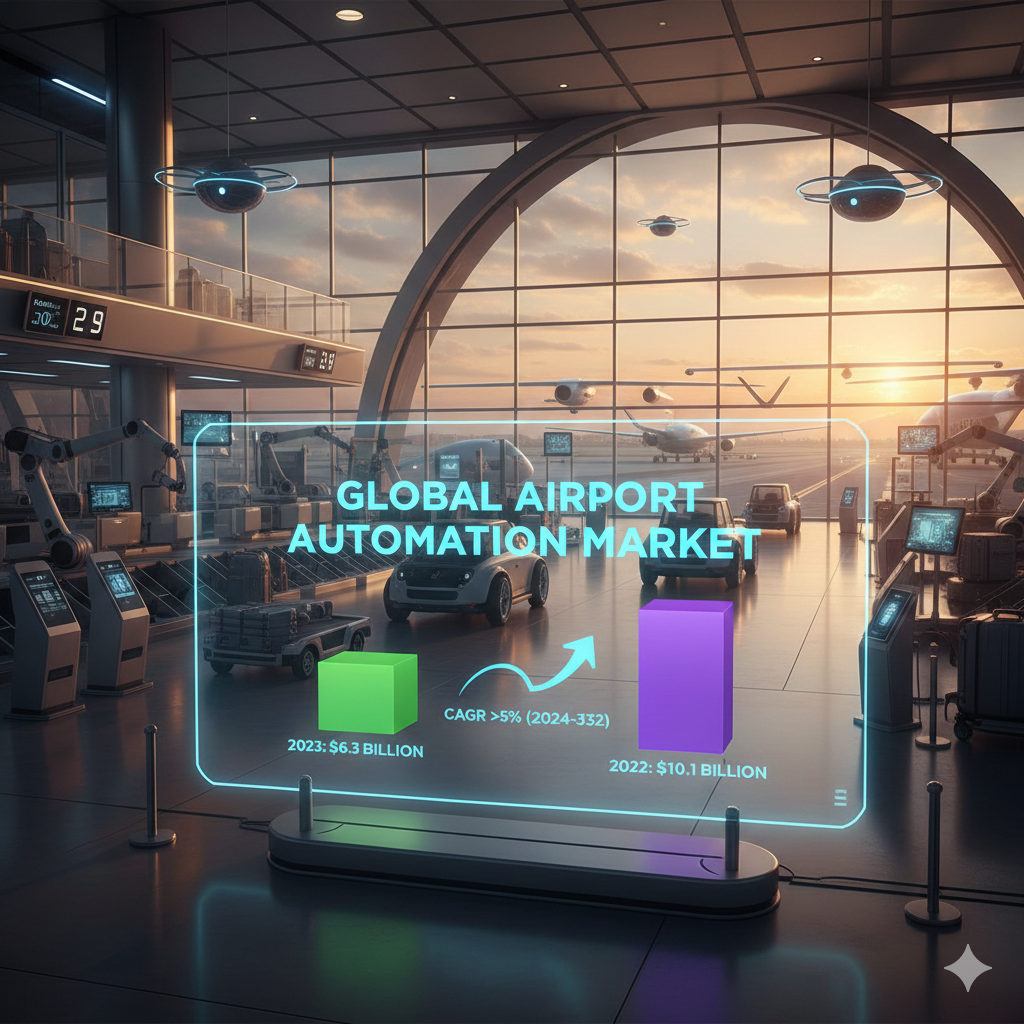
As airports continue to grow, automation provides significant benefits to streamline operations through all phases of an airline terminal and assist in managing the flow of passengers, which also results in shorter wait times.
Automation Enhances Operational Efficiency at Airports:
- Self-Service Kiosk: Passengers can check in, select their seats, and print their boarding passes at a self-service kiosk without having to interact with an employee to do so.
- Automated Baggage Handling Systems: Smart conveyor systems monitor the movement of bags on conveyors, which minimizes the potential for a passenger’s bag to be lost.
- Facial recognition: This system, as well as fingerprint scanning, speeds up airport security and boarding. Biometrics can eliminate the physical check-in process, allowing travelers to get through security and onto their flights more quickly.
Airports benefit by having a way to handle customer service issues at a faster pace, creating a more positive experience for their customers, and decreasing the overall amount of stress and anxiety passengers feel when traveling.
Similar Reading: What You Can’t Buy With Arizona’s ESA Funds: The Complete Parents’ Guide
How Are Robotics Used in Aviation?
Aviation Robotics. Robot technologies have been applied to many of the aviation industry’s day-to-day operations, including a wide variety of tasks that would otherwise be tedious and/or dangerous for human workers.
Examples of Robotic Applications in Aviation:
Commercial passenger Aircraft Cleaning Robot: Robotic cleaning systems allow an airline to clean the interior of a commercial passenger aircraft quickly and effectively.
Robotic Baggage Handling Systems: Robotic baggage transportation systems enable an airline to move passenger baggage from the airport terminal to the aircraft.
Automated Robotic Arms for Aircraft Inspections: Robotic inspection systems allow airlines to inspect areas of their aircraft that are normally difficult to reach for potential cracks and/or other damage.
Robotics used in aviation enables airlines to have both improved safety and speed of service while at the same time reducing the physical stress and burden on workers.
Similar Reading: Alabama’s CHOOSE Act ESA Just Put Education Funding in Your Hands—Here’s What You Need to Know
How has automation improved flight safety and operational efficiency?
Through the adoption of automated systems in commercial aviation, both safety and operational effectiveness have greatly increased. Automation is used by a significant number of today’s aircraft (both in-flight as well as the ground) to boost the productivity of pilots and ground personnel.This is how automation improved flight safety and operational efficiency.
Administrative Efficiency through Robotic Process Automation (RPA)
A Norwegian airport operator automated invoice processing using RPA, handling over 100,000 invoices annually and increasing processing speed by 90%, which equaled the workload of three full-time employees.
How Automation has Made Air Travel Safer and More Efficient:
- Improved Autopilots: Pilots use improved autopilot systems for long periods of time and in difficult flight situations.
- Weather Data Analysis: Automated systems give pilots up-to-the-minute information about turbulence and bad weather.
- Planning flightpaths that use less fuel: Automated systems figure out the flightpath that uses the least amount of fuel to save money and have the least effect on the environment.
Because of these changes, flying for business has become one of the safest ways to get around the world.
Similar Reading: Withdrawing From Public School Mid-Quarter: Everything Arizona ESA Parents Need to Know
Benefits of Automation and Robotics in Airline Operations
Here are some big reasons why How Automation and Robotics Are Changing Airline Operations is a good book:
- Less time wasted: Faster boarding and handling of luggage.
- Improved Safety: Automated monitoring cuts down on mistakes made by people.
- Cost Effectiveness: Predictive maintenance saves money by stopping big repairs from happening.
- Better experiences for passengers: shorter lines, faster check-in, and a better experience overall because of fewer delays and easier travel.
How robotics and automation in aviation affect the experience of passengers.
More than 70% of the biggest airports in the world use automated check-in systems that let people do it themselves.
Automated robotic high-tech inspection systems can find surface flaws on a commercial airplane with more than 95% accuracy.
AI-based flight planning cuts down on the amount of fuel used by planes by about 5% to 10%, which also means that emissions into the air go down by a lot.
These facts show how much technology is changing the aviation industry.
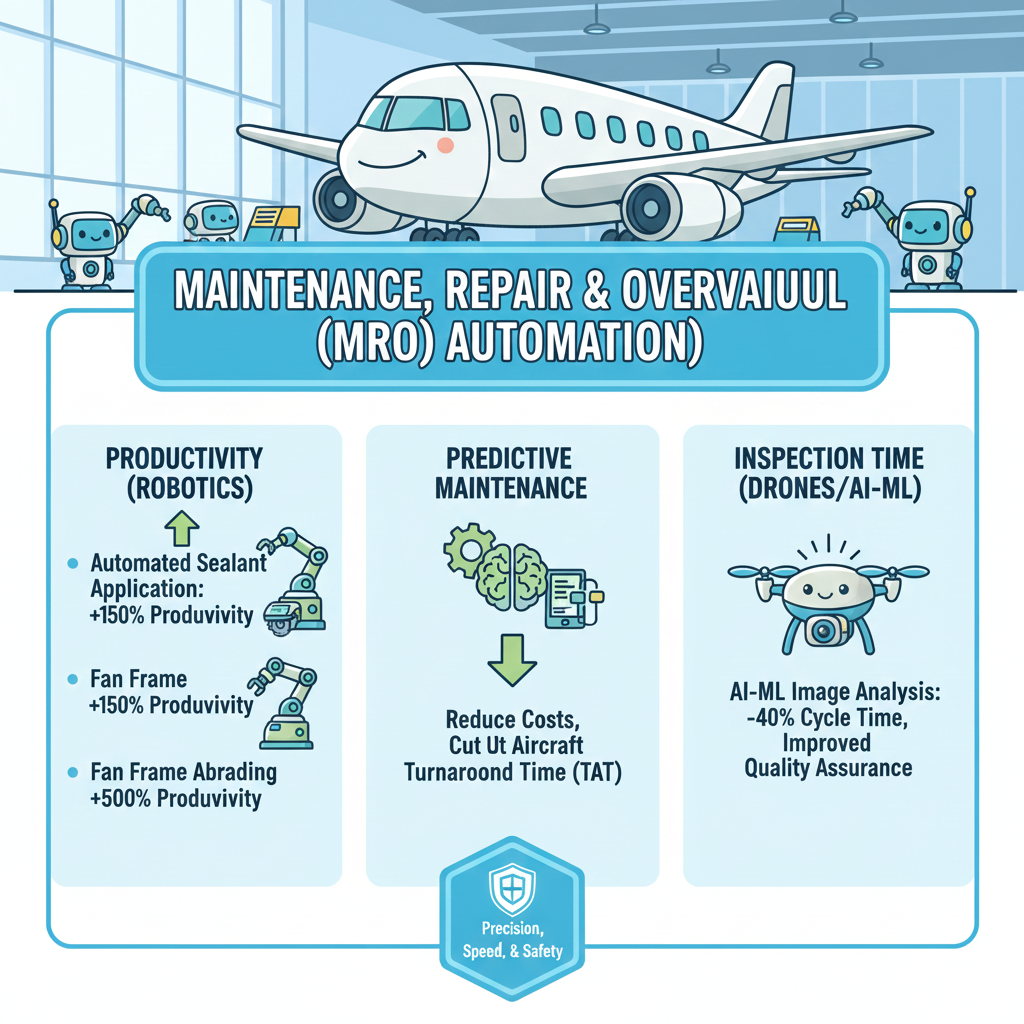 The Future of AI, Automation, and Robotics in Airlines
The future of air travel will be even smarter. We can expect:
- Fully automated boarding processes
- AI-powered virtual travel assistants
- More advanced robotics for aircraft repair and maintenance
As technology continues to evolve, the airline industry will become more efficient, safer, and passenger-friendly.
Similar reading: How to Get Reimbursed for Your Child’s Tablet or Laptop with Arizona ESA Parents’ Guide
Conclusion
How automation and robotics are transforming airline operations is no longer just a theory or an idea—we now live it, thanks to AI. The innovation of AI’s driving force in airport terminal operations is quickly accelerating while allowing airlines to utilize varying types of robotic devices within aviation. The airline industry’s future looks to be more intelligent and more secure than ever before. Most importantly, many airlines have been able to increase flight safety and operational efficiency through automation, making air travel the most reliable it has ever been. Those airlines that have adopted these types of technologies are now setting new benchmarks for Global Aviation Excellence! ✈️
Moonpreneur is on a mission to disrupt traditional education and future-proof the next generation with holistic learning solutions. Its Innovator Program is building tomorrow’s workforce by training students in AI/ML, Robotics, Coding, IoT, and Apps, enabling entrepreneurship through experiential learning.