
A lot of parents want learning to be joyful, meaningful, and organic for their children. One beautiful way to do that is with a nature-based homeschool curriculum. It connects day-to-day learning to what’s happening outside: trees, soil, rain, sunlight, animals, plants, and the changing seasons.
Instead of only using books or screens, children learn through exploration, observation, touch, movement, and discovery. It makes learning peaceful, playful, and deep. In this guide, we’ll talk about the nature-based homeschooling you should know.
What Is a Nature-Based Homeschool Curriculum?
A nature-based homeschool curriculum uses the natural world as the main space for learning for the kids. It means that children do not stay indoors all day. Instead, they spend a lot of time outside exploring and learning through real-life experiences. Children learn by:
- Watching plants grow
- Touching soil
- Observing insects
- Listening to birds
- Noticing weather changes
- Collecting leaves or stones
Nature becomes their “classroom,” and the child learns lots of subjects through these simple outdoor moments. This method supports the following:
- Academic learning
- Physical growth
- Emotional calmness
- Creativity
- Curiosity
Why Nature-Based Learning Helps Children
Most of the parents choose nature-based learning for their kids because it supports their whole development, including mind, body, and feelings. Here are some of the biggest benefits:
1. Children Learn Better When They Do Things
When kids touch, see, and explore things themselves, they understand the lessons more clearly. For example:
- Measuring a plant teaches math
- Watching a bug teaches science
- Observing clouds teaches weather patterns
Children remember all these lessons longer because they learned them through real experience while having fun.
2. Nature Grows Curiosity Naturally
Nature always changes during rain, sunshine, birds, trees, flowers, and insects. This makes children naturally start asking questions like:
- “Why does this plant bend toward the light?”
- “Where do ants go at night?”
- “Why do leaves fall?”
It is curiosity that makes children more active learners.
3. It Keeps Children Calm and Happy
Spending time outdoors reduces stress in children as the nature gives everyone:
- Fresh air
- Open space
- Quiet sounds
- Soothing colors
This helps children focus better when learning.
4. Nature Helps Children Move Their Bodies
A nature-based curriculum also encourages them to walk, climb, run, dig, and explore everything. This improves their:
- Strength
- Coordination
- Balance
- Health
A healthy body supports a healthy mind.
5. Nature Builds Confidence
Last but not least, when children solve small outdoor challenges like building a small shelter with sticks or planting a seed, they feel proud. And this boosts independence and gives them confidence.
How to Plan a Nature-Centered Homeschool Curriculum
- Identify Learning Goals
Begin by considering the essential skills your child should master: reading, writing, and math as well as some simple science. You can look up your local homeschool regulations if necessary. Then bring in your child’s passions so learning feels fun and natural for them. - Choose a Short Planning Window
Plan just one to four weeks at a time. Nature evolves quickly, and so do children’s interests. Short plans ensure that it is easy to make adjustments if something doesn’t work out or if your child suddenly becomes interested in a new topic. - Create Simple Daily Routines
You don’t have to stick to a strict schedule. Create a calm rhythm instead. For instance, mornings could be for indoor work like reading & math, and afternoons might be for outside play, walks, or projects. This helps the day feel steady and easy. - Add Extra Support When Needed
It is okay to get help. Subjects like writing, math, or science experiments can be supported with online classes, group programs, or a tutor. Employing extra help is beneficial to parents because it helps make learning assignments easier.
What Subjects Can You Teach Through Nature?
A nature-based homeschool can include all the major subjects. The only change you are making here is that you are connecting your kid simply with the outdoor activities, like:
1. Reading & Writing
- Children can read stories outside.
- They can write simple notes about things they see in nature.
- They can create stories inspired by the outdoors.
2. Math
Nature is full of numbers, and with that, children can learn to:
- Count leaves or petals
- Measure shadows
- Compare the sizes of stones
- Track temperature changes
This makes their math hands-on and clear.
3. Science
Science becomes quite exciting outdoors as the children can learn about:
- Plants
- Animals
- Weather
- Soil
- Water
- Life cycles
Real observations make science even more meaningful.
4. Art
Nature gives endless art materials to the kids, like:
- Leaves
- Flowers
- Stones
- Sand
- Sticks
Children can draw, paint, build, or make patterns using the natural items.
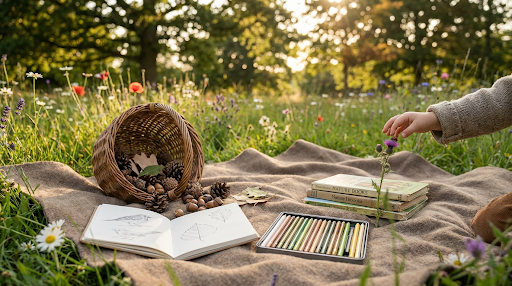
5. Social Studies
Children can learn a lot about:
- Local geography
- Seasons in their region
- The way people interact with nature
- Community parks and natural spaces
This helps them understand the world around them.
Easy Nature Activities for Parents to Begin
- Schedule short daily nature walks and let your child observe colors, shapes, plants, creatures, and sounds.
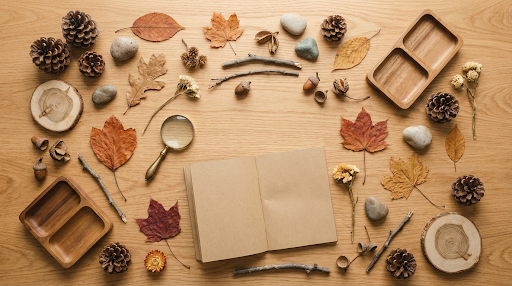
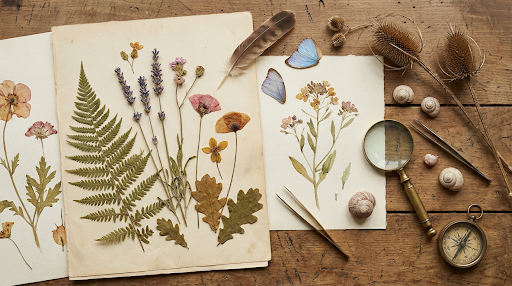
- Begin a nature journal and have your child sketch or write one thing they observe outside.
- Sow some seeds in a pot or a small patch of soil. Teach your child to water the plants using a plant waterer and help them build experience and responsibility.
- Conduct weather learning by having your child look at the sky daily and identify whether it is sunny, cloudy, rainy, windy, or humid.
- Even if you’re in a city, try bird or bug watching. Kids can observe pigeons, sparrows, ants, or butterflies to see how they behave and move.
- Encourage nature art with simple materials from the outdoors. Your child can do leaf rubbings, make patterns with stones, or paint with soil or flower colors.
Different Types of Nature-Based Homeschooling
What does nature-based homeschooling look like for your family? There is no “one right way.” It’s about what works best for your home, your child, and the place where you live. Here are some simple ways nature-based learning can take place:
Forest-Style Learning
In this form of learning, kids spend the majority of their time outside. The trees, grass, rocks, and animals are their classroom. Children learn by moving around, touching objects, and following where their curiosity leads them. They head outdoors in sunshine, rain, and even snow to see for themselves how nature changes throughout the year. A child could create a little house out of sticks, take animal prints in the mud, listen to birds sing, or count leaves and stones. And they learn organically without having to be tied to a desk.
Montessori-Style Nature Learning
In this approach, children learn by touching and investigating what is there. Nature becomes almost a gentle teacher as kids touch, feel, and do things themselves. What’s more, they absorb countless subjects in the process without even knowing it. A child might measure a garden bed for math, water plants for science, or draw what they observe outside as a way of practicing writing. This method of learning also teaches children how to care for nature and feel responsible.
Charlotte Mason Nature Learning
In this approach, children spend slow and quiet time outside. They look closely at small natural details, such as how a leaf is formed or how bugs move. They record what they see by either writing or drawing it in a special notebook. A child might draw a flower they notice, a bird perched on a branch, or the same outdoor scene repeatedly to observe how it changes each season. This method helps children focus and pay attention, think deeply, and gradually form an attachment to the natural world.
Project-Based Outdoor Learning
In this type of learning, children pick one big topic they are truly passionate about and study it for days on end. They observe the environment, ask questions, and actually do real outdoor projects connected to that subject. For instance, if a child is interested in water, they might test the water in a stream to see whether it is clean or dirty, watch how the water changes over time, and share what they have learned with others. This makes them good thinkers, problem-solvers, and confident learners.
Moving Forward with Nature-Based Learning
A nature-based homeschool curriculum is a gentle, peaceful, and beautiful way for children to learn. Instead of sitting all day with books, children can experience the real world as nature becomes a kind teacher who reveals something new each day.
This mode of learning allows the child to grow in every aspect of life. Their brain becomes more focused, their body becomes stronger, they feel more peaceful, and they become more creative. They learn by seeing, doing, and exploring, so learning never feels forced or stressful.
Big plans aren’t necessary for parents to start. Tiny steps can also have a big impact; taking a short walk outside, planting something like a small seed, looking at the sky, or drawing what they see in nature. When these little moments happen daily, the child’s rhythm comes into harmony with nature. Over time, children begin to learn out of their own curiosity and from the pleasure and confidence they feel in their connection with the world.l
Moonpreneur is on a mission to disrupt traditional education and future-proof the next generation with holistic learning solutions. Its Innovator Program is building tomorrow’s workforce by training students in AI/ML, Robotics, Coding, IoT, and Apps, enabling entrepreneurship through experiential learning.