Attend our in-person Robotics & Math



Deciding to educate a child at home can bring up a lot of questions. What paperwork needs to be filed? Does a parent need a teaching qualification? Which subjects must be covered? And what happens if the child wants to return to traditional school later?
For parents considering how to homeschool in Arizona, understanding the state’s requirements is an important first step. Arizona offers families flexibility in how they educate their children, but there are still legal responsibilities to follow. From filing an Affidavit of Intent to planning a well-rounded curriculum, this guide explains what parents need to know before getting started.
Why Are More Parents Exploring Homeschooling in Arizona?
Families choose homeschooling for different reasons. Some want a flexible schedule, while others prefer a learning environment that follows their child’s pace, interests, or individual needs.
According to the Johns Hopkins Homeschool Hub, an analysis of U.S. Census data estimated that approximately 5.26% of Arizona families homeschooled during the 2023–24 school year. During fall 2020, the estimate had reached 13%, reflecting the significant increase in home education during the pandemic.
These figures suggest that homeschooling remains an important education choice for Arizona families. However, choosing this path involves more than moving lessons from a classroom to a living room. Parents need to understand state requirements and create a consistent learning plan.
Ready to Start Homeschooling in Arizona? Explore your ESA options
Recommended Reading: 10 Things I Wish I Had Known Before Becoming a Parent
Arizona Homeschool Requirements: What Does the Law Say?
Before starting an Arizona homeschool, parents should understand the state’s compulsory education rules.
Under Arizona Revised Statutes §15-802, children between the ages of 6 and 16 must receive instruction in at least five subjects:
- Reading
- Grammar
- Mathematics
- Social studies
- Science
Parents or legal guardians can choose a public, private, or charter school, homeschool their child, or participate in an Arizona Empowerment Scholarship Account (ESA).
Arizona does not require parents to hold a teaching certificate to educate their children at home. However, parents are responsible for ensuring that the required subjects are covered.
Is Homeschooling in Arizona the Same as Participating in ESA?
No. This is an important distinction for parents researching education options. Traditional homeschooling means that the parent or guardian primarily conducts the child’s education at home. Families choosing this route must follow the applicable homeschool notification requirements.
An ESA is a separate education arrangement. Parents who sign an ESA contract should not automatically file a traditional homeschool affidavit. For example, the Maricopa County School Superintendent’s Office specifically instructs families with an ESA contract not to submit a homeschool affidavit.
Parents if you are comparing an Arizona homeschool arrangement with ESA participation, they should understand the legal and administrative differences before choosing.
How to Start a Home School in Arizona: The Paperwork Parents Need
One of the biggest concerns for families starting a home school in Arizona is knowing which documents to prepare and where to submit them.
For children covered by Arizona’s compulsory education requirements, parents generally need to complete the following steps.
Step 1: Complete the Affidavit of Intent
Parents must file an Affidavit of Intent with the County School Superintendent in the county where they live.
The affidavit includes:
- The child’s full name
- The child’s date of birth
- The current address of the school the child is attending, if applicable
- The names, addresses, and telephone numbers of the people who have legal custody of the child
The affidavit must generally be filed within 30 days of beginning homeschool instruction.
Step 2: Provide Proof of the Child’s Identity and Age
Parents must also submit proof of the child’s identity and age. A certified birth certificate is commonly used, although Arizona law allows other reliable forms of documentation in certain circumstances. Check the county superintendent’s instructions because accepted documents and submission procedures may differ.
Step 3: Submit the Documents to the County Office
The affidavit and supporting documentation must be submitted to the appropriate county school superintendent.
Some counties offer online registration, while others accept documents by mail or in person. For example, Maricopa County offers an online Homeschool Connect option as well as mail and in-person registration.
Step 4: Keep Copies for Your Records
Keep copies of the submitted affidavit and supporting documents. Maintain a record of the filing date and any communication from the county office. This simple step can help parents avoid confusion if they need to refer to their registration later.
Arizona Homeschool Paperwork Checklist
| Requirement | What Parents Need to Do |
|---|---|
| Affidavit of Intent | Complete the affidavit with the required student and parent details. |
| Proof of Age and Identity | Prepare a certified birth certificate or another accepted document. |
| Notarization | Follow the county's affidavit notarization instructions. |
| Submission | Send the required documents to the County School Superintendent. |
| Personal Records | Keep copies of all submitted documents and confirmation for your records. |
| Withdrawal Notification | Notify the county within 30 days if homeschooling ends. |
Building an Effective Arizona Homeschool Curriculum
Once the paperwork is complete, the next challenge is planning what the child will learn. A good homeschooling plan should cover the five required subjects while also giving children opportunities to explore their interests, develop practical skills, and apply what they learn.
Parents planning homeschooling in Arizona can consider combining different learning methods:
- Core academic subjects: Use structured textbooks, worksheets, reading materials, and online resources for mathematics, science, grammar, reading, and social studies.
- Hands-on learning: Add experiments, building activities, coding exercises, and practical projects to help children apply classroom concepts.
- Communication and creativity: Include writing assignments, presentations, discussions, and activities that help children express their ideas confidently.
- Progress tracking: Maintain samples of assignments, completed projects, reading lists, and assessments to understand how the child is progressing.
A home school in Arizona does not have to rely entirely on textbooks. A combination of academic learning and practical experiences can help children develop a broader range of abilities.
How Can Moonpreneur Support a Well-Rounded Learning Experience?
Parents looking for additional learning opportunities can explore programs that complement their child’s education.
Moonpreneur offers Robotics and STEM learning programs that introduce students to coding, electronics, problem-solving, and hands-on project development.
For example, Moonpreneur student Jomiloju, 10, build his project, Rock, Paper, Scissors on the Micro:bit. It starts a countdown “3, 2, 1”, and then randomly chooses rock, paper, or scissors, just like the real game.
The image below shows a glimpse of Jomiloju’s digital portfolio on the Moonpreneur website.
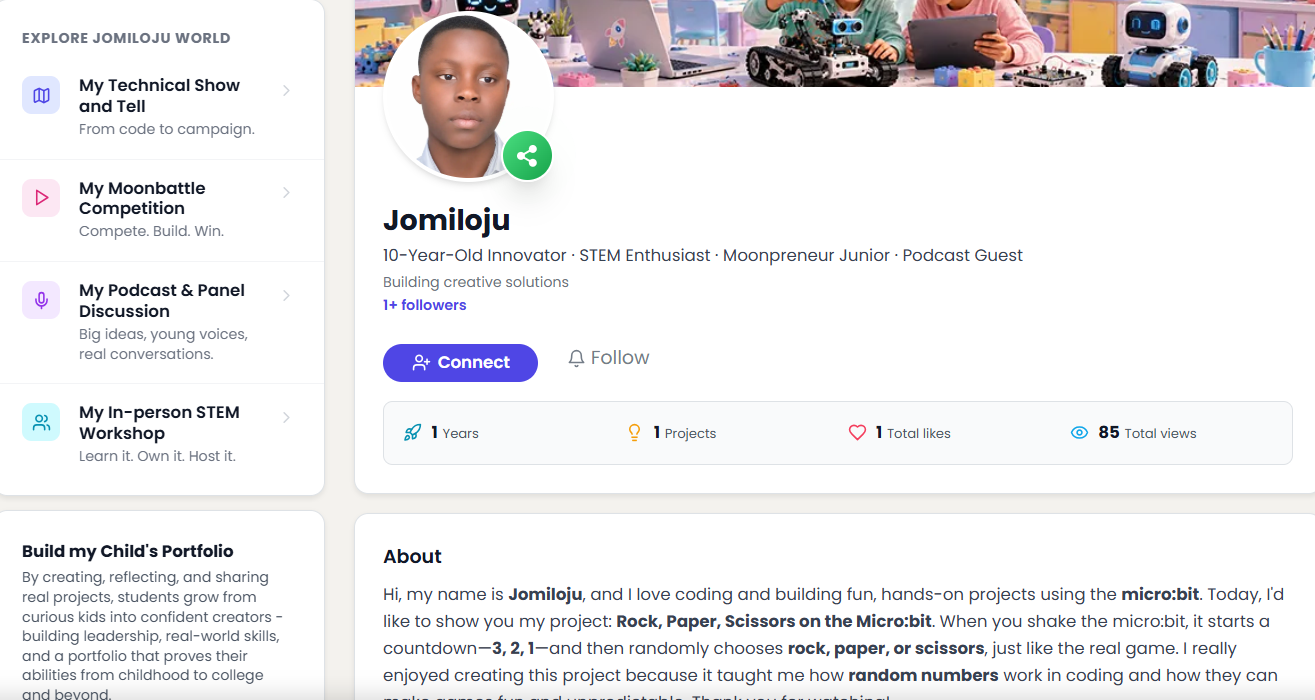
This is an example of project-based learning, not claims that the students were homeschooled. Parents can use them as inspiration when considering ways to bring practical learning into a home education plan.
What Happens If a Child Stops Homeschooling?
Parents may eventually decide to enroll their child in a public, private, or charter school. A change in education plans does not mean the earlier homeschooling experience has to be lost.
Under Arizona law, parents must notify the County School Superintendent within 30 days of terminating homeschool instruction. If the family resumes homeschooling later, a new affidavit must be filed within the required timeframe.
Before enrolling the child in another school, parents should contact the receiving school to understand its grade placement, academic record, and assessment requirements. Keeping a record of completed subjects, assignments, projects, and learning progress can make this transition easier.
What Is Your Next Step?
Starting a homeschool in Arizona begins with understanding the legal requirements, completing the necessary paperwork, and creating a learning plan that supports your child’s academic and personal development. Take time to explore different teaching methods, track progress, and include opportunities for practical learning.
A well-planned home education journey can go beyond textbooks. Explore Moonpreneur’s ESA programs to discover ways to make learning more interactive, creative, and experience-driven.
Frequently Asked Questions About Homeschooling in Arizona
1. Do parents need a teaching certificate to homeschool in Arizona?
No. Parents do not need a teaching certificate or formal teaching qualification to homeschool in Arizona. However, they are responsible for providing instruction in the five required subjects: reading, grammar, mathematics, social studies, and science.
2. At what age can a child start homeschooling in Arizona?
Arizona's compulsory education requirements generally apply to children between 6 and 16 years old. Parents may choose to delay formal homeschool instruction until the child reaches age eight under the conditions described in state law. Families should check the affidavit requirements with their county.
3. Is an Affidavit of Intent required for every Arizona homeschool student?
For children covered by the state's homeschool notification requirements, parents generally need to file an Affidavit of Intent with the County School Superintendent within 30 days of beginning home instruction. It is generally a one-time filing unless homeschooling ends and is later resumed. Children participating in ESA follow a separate arrangement.
4. Do homeschooled students in Arizona have to take standardized tests?
Arizona's homeschool statute does not establish a general annual standardized testing requirement for traditional homeschool students. However, parents should maintain academic records and check the requirements of any school, college, or program their child may enter later.
5. Can a homeschooled child return to public school in Arizona?
Yes. A homeschooled child can return to public school. Parents should notify the County School Superintendent within 30 days of ending homeschool instruction and contact the receiving school to understand its enrollment and grade-placement procedures.
6. Where can parents find home school Arizona forms and requirements?
Parents can obtain the relevant affidavit and instructions from the County School Superintendent's Office where they live. The Arizona Department of Education and Arizona Revised Statutes §15-802 are also useful sources for understanding state education requirements. Families searching for home school Arizona resources should always verify forms and procedures with their county.