Attend our in-person Robotics & Math




You’re ready to start homeschooling in Florida, and the first few searches leave you with more questions than answers.
Home education program?
Umbrella school?
Notice of intent?
Every site seems to assume you already speak the language.
You’re in good company and Florida’s data shows 152,871 students from 114,370 families took part in home education programs in 2024-25. Nationally, the Johns Hopkins Homeschool Research Lab reports that homeschooling growth keeps outpacing pre-pandemic rates. Florida’s count dipped 1.7% that year, but the researchers point out that the state no longer counts students who use its education savings account as homeschooled, so the dip may understate how many families learn at home.
Florida gives you three distinct paths, each with different levels of structure and autonomy. The key is finding the one that matches your teaching style, availability, and comfort with paperwork and this guide will help you understand your next step.
How to Homeschool in Florida with Moonpreneur?
You’ve decided homeschooling is right for your child but now a harder question shows up: what does a good week of learning actually look like?
Florida parents are asking it for new reasons. A South Florida homeschool educator told Local10 that she has seen a shift from families who homeschool mainly for religious or personal reasons to families whose child is gifted or on the spectrum, and who believe they can serve that child better at home. When your child’s needs are that specific, a one-size-fits-all curriculum rarely covers everything.
That’s where Moonpreneur comes in as our STEM and entrepreneurship programs give your children and teens hands-on projects that go beyond the textbook, and they work alongside any of the three Florida paths below.
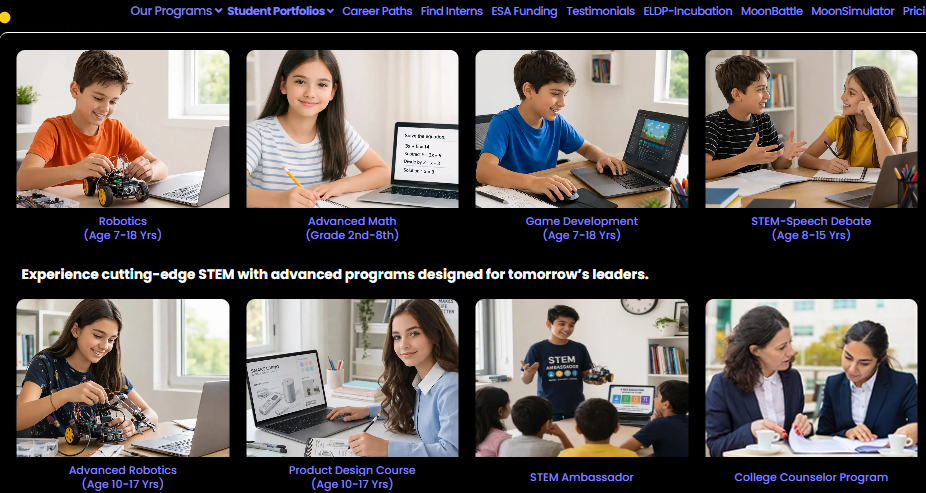
Whether you teach independently, enroll in an umbrella school, or hire a tutor, Moonpreneur can cover the build-something, solve-something side of your child’s week. The projects your child completes also make strong material for the portfolio Florida asks home education families to keep.
One thing to know before you go further: Moonpreneur enriches your child’s learning, but you still choose one of the three legal paths. This is how they work.
Explore Moonpreneur’s ESA programs and see which one fits your child.
Florida Homeschool Options: 3 Legal Paths
Florida law gives you three ways to homeschool. They differ in how much structure you get, how much freedom you keep, and who handles the paperwork. (Homeschool co-ops are great for classes and community, but they aren’t a legal path on their own. You still need one of the three below.)
Home Education Program (Independent Route)
The problem: You want control over what and how your child learns, but you don’t want to break any rules.
The solution: Florida’s home education program gives you exactly that. It’s the path the state tracks most closely, and the one behind the enrollment numbers above. The law doesn’t require a particular educational background for parents or a standard curriculum. You choose the curriculum, set the schedule, and decide what school looks like on any given Tuesday.
The trade-off is administrative. You file a notice of intent with your school district, keep a portfolio of your child’s work, and arrange an annual evaluation. It’s more paperwork, but many families find the freedom worth it.
Private School Umbrella Programs in Florida
The problem: The freedom sounds great but dealing with the district, the forms, and the deadlines doesn’t.
The solution: A private school umbrella program lets you teach at home while the school handles the legal reporting. You follow the school’s attendance, recordkeeping, and curriculum policies, and because your child counts as a private school student, you skip the district notice and annual evaluation that the home education program requires. You provide 180 days of instruction and keep attendance and immunization records.
Think of it as homeschooling with training wheels. You still teach, but someone else watches the administrative road. Before you enroll, ask about fees, curriculum rules, and whether the school provides transcripts.
Home-Based Private Tutor
The problem: You want structure, but you don’t have the time or confidence to teach every subject yourself.
The solution: This path puts a Florida-certified teacher in charge of instruction. The tutor must deliver 180 actual teaching days per year (or the hourly equivalent) and keep attendance records.
It’s usually the least common option because of hiring costs and the coordination involved. In return, you get structure without district notification or assessment requirements.
Florida Homeschool Requirements: What You’ll Need to File
“Paperwork” is the word that stops many parents from starting.
So, for the home education program, it comes down to four steps. Putnam County Schools summarizes them well:
- File a notice of intent. Send a written notice to your district superintendent within 30 days of starting your program. Include each student’s name, address, and birth date.
- Keep a portfolio. Write a log as you teach, list your reading materials by title, and add samples of writing, worksheets, or creative work. Keep it for two years. The superintendent can inspect it with 15 days’ written notice.
- Arrange an annual evaluation. You pick the method: a portfolio review by a Florida-certified teacher, a nationally normed test, a state assessment, or an evaluation by a licensed psychologist. File the results with the superintendent each year.
- File a termination notice if you stop. If you end your program, notify the district within 30 days and include a final evaluation.
The payoff: the Florida Department of Education says home education students may take part in dual enrollment and may qualify for Florida Bright Futures.
How to Choose the Right Florida Homeschool Path
The choice feels permanent, so it’s easy to freeze. However, before you zero in on a style, ask yourself:
- How much time can I realistically spend teaching each day?
- Am I comfortable keeping records and meeting deadlines?
- Do I want full control of the curriculum, or some guardrails?
- Does an umbrella school fee or a tutor fit my budget?
- Will my child need help with transcripts as they approach high school?
Here’s a quick way to read your answers:
- You want freedom and don’t mind records: the home education program fits. You pick the curriculum, you file the notice, and you keep the portfolio.
- You want someone else to handle the paperwork: look at Florida umbrella schools. You teach, and the school manages the legal reporting.
- You want a certified teacher leading instruction: consider a home-based private tutor, and budget for the cost.
Many families also worry about academics, so here is some reassurance. NHERI’s research summary reports that homeschooled students typically score 15 to 25 percentile points above public-school students on standardized achievement tests, and that parents’ teaching certification showed no link to achievement. NHERI is a homeschool-focused research group, so treat the numbers as encouragement, not a guarantee. What matters most is a plan you can sustain.
Funding matters too. Florida’s Personalized Education Program (PEP) offers an education savings account to students who don’t attend public or private school full time. Applications for 2026-27 closed April 30, 2026, and Step Up for Students invites families to sign up for updates on 2027-28. Florida law doesn’t classify PEP students as traditional home education students, so read the rules before you decide.
And here’s the good news: you’re not locked in forever. Families switch approaches as circumstances change. The best homeschool program is the one you’ll actually stick with, and the one that lets your child thrive.
For official program details, visit the Florida Department of Education’s Home Education page.
Explore Moonpreneur’s ESA programs and see which one fits your child.
Homeschooling in Florida FAQs
Do I need to be a certified teacher to homeschool in Florida?
How many days a year do I have to teach?
Will my child get a diploma?
Can I switch paths later?
Is a co-op the same as an umbrella school?
Note: This guide offers general information, not legal advice. Check current requirements with your local school district before you start.