Attend our in-person Robotics & Math



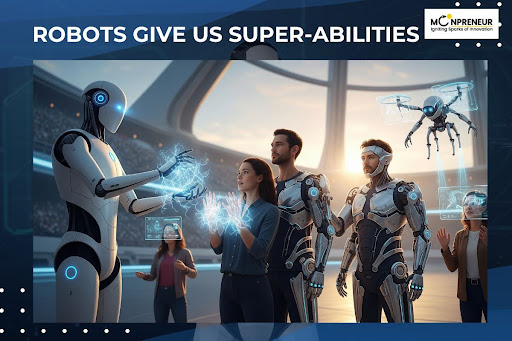
Imagine a world where humans can leap higher, run faster, and lift weights far beyond natural limits. Sounds like a superhero movie, right? Well, with bionics and robotics, that fantasy is slowly becoming reality. Scientists and engineers are combining advanced robotics with human biology to give people super-abilities—from walking again after paralysis to enhancing natural strength. Let’s take a deep dive into how bionics is reshaping human potential and what it means for the future of humanity.
What is Bionics?
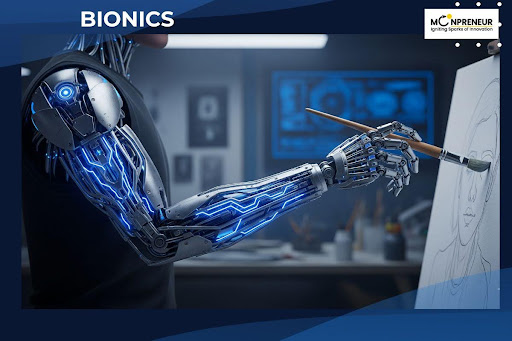
Bionics is the science of designing and building devices inspired by the structure and function of living organisms. The word comes from “biology” and “electronics,” showing how the two fields merge. In practice, bionics often means creating robotic devices—like artificial limbs, exoskeletons, or implants—that work in harmony with the human body. Unlike traditional prosthetics, bionic devices are intelligent and responsive, often controlled by muscle signals, brain waves, or sensors that mimic natural movement.
For instance, a person with a bionic arm can move their fingers simply by thinking about it, thanks to advanced neural interfaces. This fusion of biology and technology doesn’t just restore lost functions—it can unlock abilities beyond human limits.
Robots as Super-Ability Enablers
Robots today are stepping far beyond factory floors and entering the world of human enhancement. Advanced robotics is being used to give humans powers that sound superhuman:
- Exoskeleton robots are wearable suits that give extra strength, letting people lift hundreds of pounds without injury.
- Robotic prosthetics allow amputees to move naturally and even feel sensations through sensory feedback.
- Medical robots help paralyzed patients walk, climb stairs, or even dance again.
In other words, robots are no longer just assistants—they’re becoming extensions of our own bodies, helping us do things that were once impossible.
Types of Bionic Enhancements
Bionics comes in many forms, each designed to boost specific human abilities:
- Bionic Limbs
Artificial arms and legs that are powered by sensors and controlled by nerves or brain signals. They provide natural movement, grip strength, and sometimes even touch sensation. - Exoskeletons
Wearable robotic frames that act like a suit of armor, giving super-strength, stability, and endurance. They’re already being tested in industries like construction, the military, and rehabilitation therapy. - Bionic Eyes & Ears
Devices like the “bionic eye” restore partial vision to the blind using cameras and electrodes connected to the retina. Cochlear implants (bionic ears) help the hearing impaired perceive sound again. - Neural Implants & Brain-Computer Interfaces
Tiny devices that connect directly with the brain, allowing people to control computers, wheelchairs, or robotic arms with just their thoughts. This technology is also paving the way for memory enhancement and faster communication.
Each of these bionic technologies is designed to either restore lost function or give abilities never before possible.
Benefits of Bionics
The impact of bionics reaches far beyond healthcare—it’s changing everyday life:
- Restoring Independence: People with disabilities can walk, run, or grab objects again, improving confidence and quality of life.
- Boosting Human Strength: Workers can perform physically demanding jobs more safely with robotic support.
- Transforming Medicine: Doctors use bionics to treat neurological disorders and physical impairments.
- Enhancing Military & Space Missions: Soldiers can carry heavy loads without strain, and astronauts may use bionic suits for mobility in low-gravity environments.
- Empowering Sports & Fitness: Athletes are exploring robotic enhancements for training, recovery, and performance.
The long-term benefit is clear: a world where human limitations are no longer barriers.
Challenges of Bionics
Despite the excitement, bionics comes with challenges that must be addressed:
- High Costs: Advanced bionic devices are expensive, making them inaccessible for many.
- Ethical Questions: Should healthy people be allowed to enhance themselves with robotic abilities? Where do we draw the line?
- Safety Risks: Since bionic devices are linked to the human body, failures or malfunctions could have serious effects.
- Privacy Concerns: Brain-computer interfaces raise questions about data security and mind privacy.
Addressing these issues will be crucial before bionics becomes a normal part of society.
The Future of Super-Humans
Fast forward a few decades, and we might live in a world where bionic upgrades are common choices—just like getting braces or laser eye surgery today. People could choose enhancements for work, sports, or lifestyle. Imagine a future where delivery workers wear exoskeletons for efficiency, or students use neural implants to learn faster.
Scientists believe that cyborg-like humans could become a reality by merging robotics, artificial intelligence, and biology. This doesn’t just mean restoring lost functions—it means creating a new era of super-humans powered by robots.
Conclusion
So, can robots give us super-abilities? The answer is a resounding YES! Through bionics, humans are already seeing, hearing, walking, and moving again. Beyond that, robotics promises enhancements in strength, speed, and intelligence. While there are challenges, the potential is limitless. As technology continues to evolve, the dream of superhuman abilities powered by robotics is no longer a fantasy—it’s our future.
Moonpreneur is on a mission to disrupt traditional education and future-proof the next generation with holistic learning solutions. Its Innovator Program is building tomorrow’s workforce by training students in AI/ML, Robotics, Coding, IoT, and Apps, enabling entrepreneurship through experiential learning.
Related Blogs:
- AI-Enhanced Robotics: The $124 Billion Revolution Reshaping Industry and Labor
- How to Introduce Robotics to Kids Ages 7-8 Years: Activities, Projects & More
- Aibo Robot Dog – The Future of AI and Robotics
- Robotics for 9-Year-Old – Fun and Educational Guide
- The Rise of Soft Robotics: Revolutionizing Automation for the Future
- Top 10 Robotics Games For Kids