Attend our in-person Robotics & Math


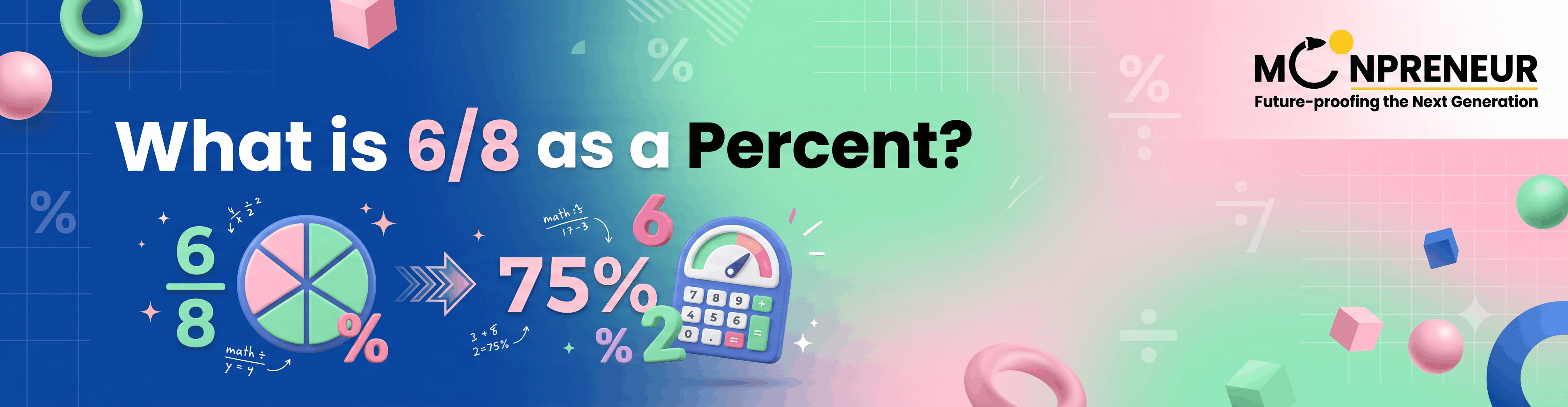
Let’s rip the band-aid off first: 6 out of 8 is 75%. As a fraction, it’s 6/8, which simplifies neatly to 3/4, and as a decimal it lands at 0.75. If you’re staring at a quiz result, a stat line, or a recipe ratio and just need the number, that’s it; you got three-quarters of the way there.
But “what is a 6 out of 8” is one of those deceptively simple questions that opens up into something more interesting once you start pulling at the thread. Is 6/8 a good score? Does it round up to an A- or down to a C? Why does the same fraction feel like a triumph on a spelling test and a disappointment on a driving exam? Let’s dig into the math, the meaning, and the moments where this particular ratio pops up in everyday life.
Recommended Reading: What is a 23 out of 30?
Breaking Down the Math
Before we talk about what 6/8 means, it helps to see exactly how it’s built. Here's the fraction in its three most common forms:
| Fraction | Decimal | Percentage |
|---|---|---|
| 6/8 | 0.75 | 75% |
| 3/4 (simplified) | 0.75 | 75% |
The simplification step is worth pausing on. Both 6 and 8 share a greatest common factor of 2, so dividing the top and bottom by 2 gives you 3/4 — the cleanest, most recognizable version of this ratio. If you've ever wondered why teachers and mathematicians prefer 3/4 over 6/8, it's simply because smaller numbers are easier to compare and visualize. They mean exactly the same thing; 3/4 is just 6/8 wearing a lighter jacket.
How to Calculate It Yourself
If you ever need to work out what 6 out of 8 (or any similar fraction) equals as a percentage, the formula is refreshingly simple:
That's the entire process. It works the same way whether you're grading a spelling test, calculating a free-throw percentage, or figuring out what portion of a pizza got eaten at a party.
Is 6 Out of 8 a Good Score?
Context is everything here, and this is really where the question “what is 6 out of 8” gets interesting. A 75% can mean wildly different things depending on where you encounter it:
- In most standard U.S. grading scales, 75% typically falls into the C to C+ range — solidly passing, but with clear room to grow.
- In stricter grading systems (some AP courses, medical school exams, or professional certifications), 75% might be right at the passing threshold or even below it.
- In sports, a 75% free-throw percentage would put a basketball player among the best shooters in the world.
- In quality control or manufacturing, a 75% success rate might be considered a serious problem requiring immediate correction.
- In personal projects or casual trivia, getting 6 out of 8 questions right is a perfectly respectable showing — three-quarters right is nothing to scoff at.
The lesson here is that a fraction is neutral; the meaning gets attached by the situation surrounding it. 6/8 is always 75%, but whether 75% is “good” depends entirely on the scale you’re being measured against.
Recommended Reading: What is a 14 Out of 18?
6 Out of 8 as a Letter Grade
If you're a student trying to translate this into a report card grade, here's a general reference. Keep in mind that individual schools and teachers set their own exact cutoffs, so always check your specific syllabus:
| Percentage Range | Typical Letter Grade | General Meaning |
|---|---|---|
| 90–100% | A | Excellent |
| 80–89% | B | Good |
| 70–79% | C 75% lands here | Satisfactory / Passing |
| 60–69% | D | Needs Improvement |
| Below 60% | F | Failing |
Quick Comparison: How 6/8 Stacks Up
Sometimes it helps to see a fraction next to its neighbors to understand where it sits on the spectrum. Here's how 6/8 compares to nearby scores out of 8:
| Score | Fraction | Percentage | Simplified |
|---|---|---|---|
| 8 out of 8 | 8/8 | 100% | 1/1 |
| 7 out of 8 | 7/8 | 87.5% | 7/8 |
| 6 out of 8 | 6/8 | 75% | 3/4 |
| 5 out of 8 | 5/8 | 62.5% | 5/8 |
| 4 out of 8 | 4/8 | 50% | 1/2 |
The Takeaway
So, what is a 6 out of 8? At its core, it’s a simple piece of arithmetic: 75%, or 3/4 in its simplest form. But like a lot of simple numbers, its real meaning depends on the story around it, whether that’s a test score, a sports stat, a recipe, or a checklist. Next time you see this fraction pop up, you’ll not only know exactly what it equals, but you’ll also have the context to judge whether it’s something to celebrate or something to improve on.
And if nothing else, you now know the fastest way to get there: divide, multiply by 100, and simplify when you can. Three-quarters of the way to mastering percentages not bad for one blog post.
Want to excite your child about math and sharpen their math skills? Moonpreneur’s online math curriculum is unique as it helps children understand math skills through hands-on lessons, assists them in building real-life applications, and excites them to learn math.
You can opt for our Advanced Math or Vedic Math+Mental Math courses. Our Math Quiz for grades 3rd, 4th, 5th, and 6th helps in further exciting and engaging in mathematics with hands-on lessons.