
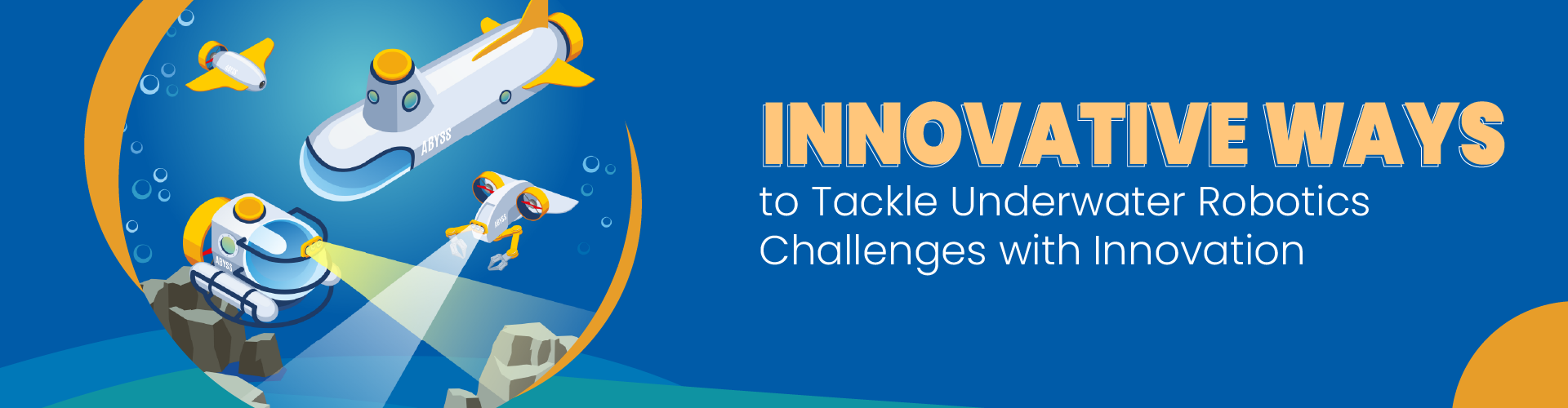
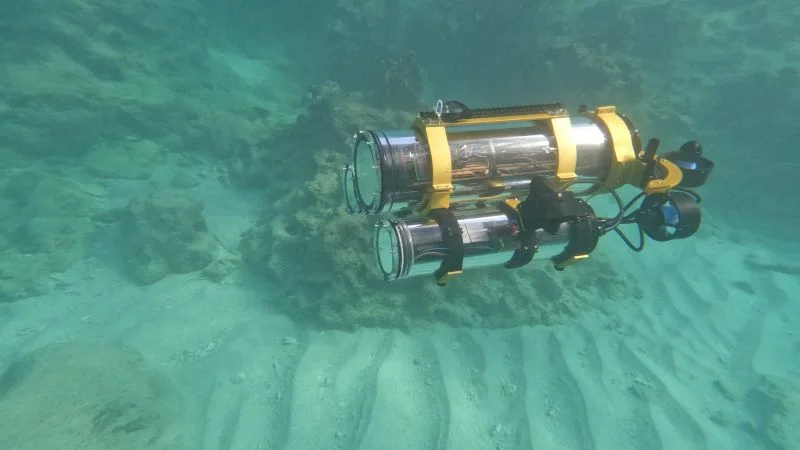
Underwater robotics stands at the cutting edge of engineering, blending mechanical ingenuity, artificial intelligence, and materials science to explore environments that are often hostile to humans. With oceans covering more than 70% of the Earth’s surface, the potential applications of underwater robots, from scientific discovery to industrial inspection, environmental monitoring, and defense, are enormous. Despite this promise, the underwater domain presents unique challenges that have historically slowed progress. In this blog, we explore those challenges and highlight innovative strategies and technologies that researchers and industry leaders are using to overcome them.
Recommended Reading: How Much Do Robotics Engineers Make?
Why Underwater Robotics Matters
Underwater robotics enables us to perform tasks that would otherwise be dangerous, expensive, or impossible for human divers. These include deep-sea exploration, infrastructure inspection, environmental assessment, search-and-rescue missions, and even defense operations. For example, autonomous underwater vehicles (AUVs) and remotely operated vehicles (ROVs) are now routinely used to map seafloors, monitor ecosystems, inspect oil and gas infrastructure, and support naval missions. However, operating in an environment where GPS doesn’t work, communication is limited, and pressure increases exponentially with depth, imposing significant engineering constraints.
Core Challenges in Underwater Robotics
Before diving into solutions, it’s essential to understand the key challenges that underwater robotics faces:
1. Communication Limitations
Water severely attenuates radio waves, making traditional wireless communication useless underwater. Instead, robots often rely on acoustic modems for communication, which offer limited bandwidth and high latency. This restricts real-time control and data streaming, especially for deep or long-range missions.
2. Navigation Without GPS
GPS signals don’t penetrate water. Underwater robots must therefore use alternative techniques such as inertial navigation systems (INS), Doppler velocity logs (DVL), and sonar-based positioning. These systems, however, can suffer from drift or reduced accuracy in complex environments.
3. Power and Endurance
Batteries remain a limiting factor for mission duration. Underwater robots often carry large power packs that add weight and reduce maneuverability. The challenge is to optimize power usage while ensuring the robot can complete extended missions.
4. Harsh Environmental Conditions
High pressure, corrosive saltwater, biofouling (marine organism buildup), and unpredictable currents can all damage systems or degrade performance over time. Designing robust hardware that can withstand these forces is non-trivial.
5. Data Processing
Underwater robots often collect massive amounts of data through sensors like sonar, cameras, and environmental probes. Processing this data quickly and accurately, particularly when communication to surface operators is slow, requires sophisticated onboard intelligence.
Innovative Solutions to Overcome Underwater Robotics Challenges
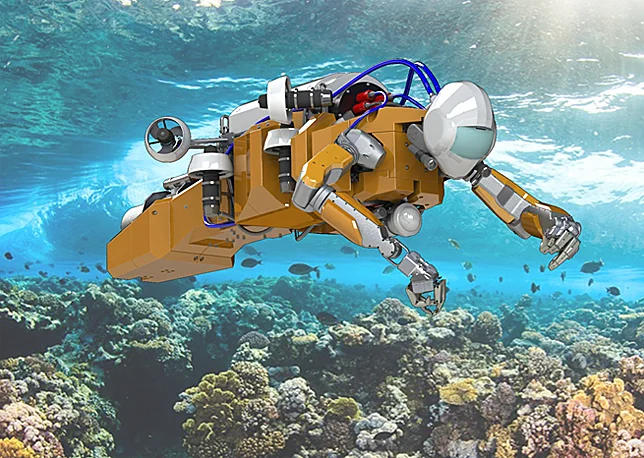
Despite these obstacles, continuous innovation is driving underwater robotics forward. Below are some of the most impactful strategies and technologies helping engineers push the boundaries of what’s possible.
1. Enhanced Communication Systems
To mitigate communication limitations:
- Acoustic Networks: New protocols and mesh networking techniques are improving acoustic data throughput and reliability, allowing multiple robots to coordinate more effectively.
- Optical Communication: In clear water, high-bandwidth optical (light-based) systems provide faster data transfer over short distances.
- Hybrid Approaches: Combining acoustics with other modalities allows robots to maintain connectivity while optimizing bandwidth and energy use.
2. Artificial Intelligence & Machine Learning
AI is transforming underwater autonomy:
- Onboard Decision Making: AI algorithms allow robots to adapt to unexpected obstacles or changing conditions without constant human intervention. For example, machine learning models can help interpret sensory data and make real-time navigation decisions despite noisy environments.
- Vision-Language-Action Models: Innovative frameworks, such as new dual-brain architectures, integrate perception and reasoning to improve autonomous navigation and task execution even when communication is limited.
3. Hybrid AUV/ROV Systems
Instead of binary designs (fully autonomous or fully tethered), hybrid systems combine the best of both worlds:
- Tethered Power & Control: For complex tasks requiring high-bandwidth links, robots can switch temporarily to tethered modes.
- Autonomous Operations: When performing routine surveys or mapping tasks, the system can operate untethered to maximize reach and endurance.
4. Advanced Materials & Mechanical Design
Underwater robots must be physically robust:
- Pressure-Resistant Housings: New materials and structural designs protect electronics from extreme pressure at depth.
- Biofouling-Resistant Coatings: Special coatings reduce marine growth, preserving sensor accuracy and reducing maintenance.
- Soft Robotics: Innovations like soft, flagella-inspired drones minimize environmental impact and improve maneuverability in delicate areas.
5. Battery & Energy Innovations
Power is still one of the biggest barriers:
- High-Density Batteries: New chemistries increase energy storage without significant weight penalties.
- Energy Harvesting: Researchers are exploring ways to capture energy from currents or temperature gradients.
- Power-Efficient AI: Neuromorphic computing and low-power AI architectures reduce energy needs for onboard processing.
6. Modular & Scalable Designs
Modularity helps underwater robots adapt to different missions:
- Sensor Swapping: Modular payload bays allow researchers to swap sonars, cameras, or environmental sensors quickly.
- Payload Scaling: Robots like the Bluefin-21 support interchangeable components for diverse missions, from mapping to defense operations.
7. Collaborative Multi-Agent Systems
Instead of relying on a single robot, teams of robots can work collaboratively:
- Cooperative Navigation: Innovative control frameworks like Virtual Elastic Tether enable robots to coordinate in confined spaces or complex terrains.
Distributed Sensing: Multiple robots can share information, building a more comprehensive and real-time understanding of the environment.
Real-World Impact: Case Studies and Use Cases
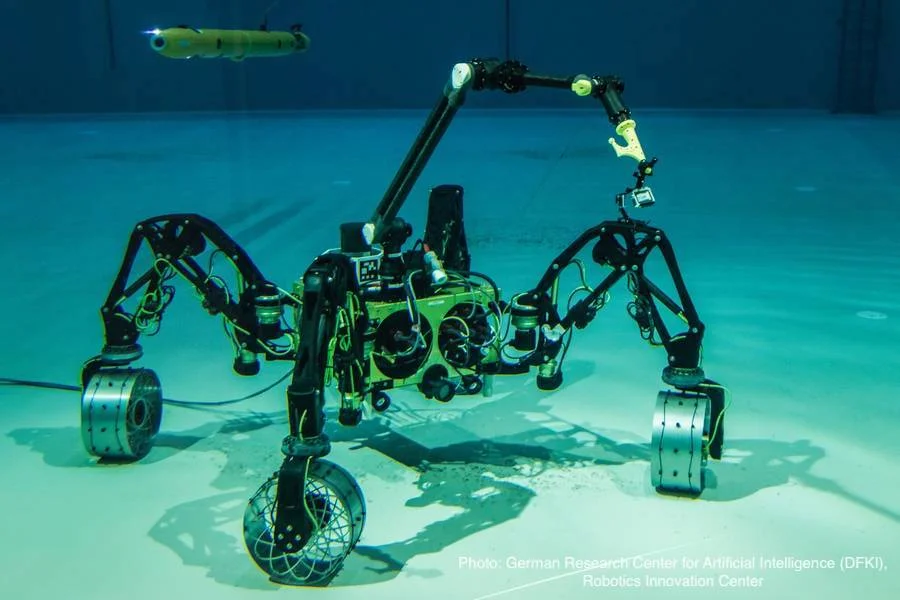
Environmental Monitoring
Underwater robots are now used to monitor marine ecosystems and track changes in real time, providing data critical to climate science and conservation efforts.
- AI-powered systems can collect and analyze vast datasets to track species, map habitats, and detect anomalies.
Industrial & Infrastructure Inspection
From offshore wind turbines to oil and gas pipelines, underwater robots perform inspections that once required human divers:
- ROVs and AUVs equipped with high-resolution cameras and sonar are being used for wear detection, structural assessment, and maintenance planning.
Defense & Security Applications
Underwater robotics plays a growing role in defense, including mine detection, surveillance, and autonomous patrol:
- Autonomous mine-sweeping robots such as the Knifefish UUV replace trained animals and reduce risk to personnel.
🧑🔬 Scientific Discovery
Scientific missions to the deepest parts of the oceans — once the exclusive domain of crewed submersibles — are increasingly aided by robots capable of full-ocean depth operation.
Looking Ahead: The Future of Underwater Robotics
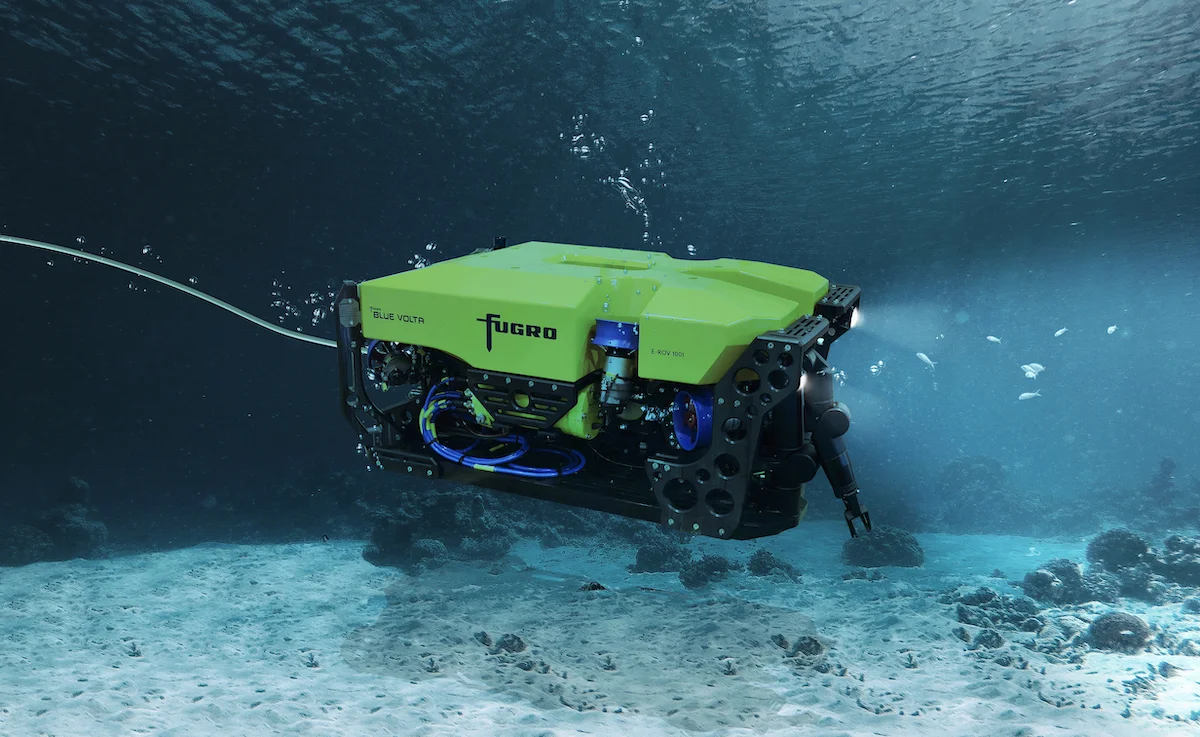
The future of underwater robotics is rich with possibilities. Advances in AI, materials science, and collaborative autonomy will push operations deeper, make robots more resilient, and dramatically lower the cost of exploration.
Some emerging trends include:
- Swarm Robotics: Groups of robots working in unison for complex mapping or search tasks.
- Bio-Inspired Designs: Robots that swim like fish or jellyfish capitalize on natural hydrodynamics for improved efficiency.
- Enhanced Human-Machine Interfaces: Better visualization, haptic feedback, and intuitive control systems for mixed human-robot missions.
Conclusion
Underwater robotics is rapidly evolving from a niche field into a cornerstone of marine technology. While the unique challenges of the underwater environment, from communication barriers to energy constraints, are significant, innovative strategies are transforming the way engineers think about and solve these problems. By harnessing advanced AI, modular hardware, collaborative systems, and smarter power solutions, the next generation of underwater robots will be more capable, resilient, and adaptable than ever before.
Whether mapping uncharted seafloors, supporting renewable energy infrastructure, monitoring ecosystems, or enhancing maritime security, these innovations are ensuring that the hidden world beneath the waves becomes a place of exploration and understanding rather than mystery.
Moonpreneur is on a mission to disrupt traditional education and future-proof the next generation with holistic learning solutions. Its Innovator Program is building tomorrow’s workforce by training students in AI/ML, Robotics, Coding, IoT, and Apps, enabling entrepreneurship through experiential learning.