


You’ve probably heard that Arizona now offers parents a school voucher worth somewhere between $7,000 and $9,000 per year. Maybe a friend mentioned it. Maybe you saw it in the news. And now you’re wondering: Is this actually enough to cover private school? How does it work? Is it worth it for my famil y?
Those are fair questions. Here’s what the data actually says.
How Much Is the Voucher, Really?
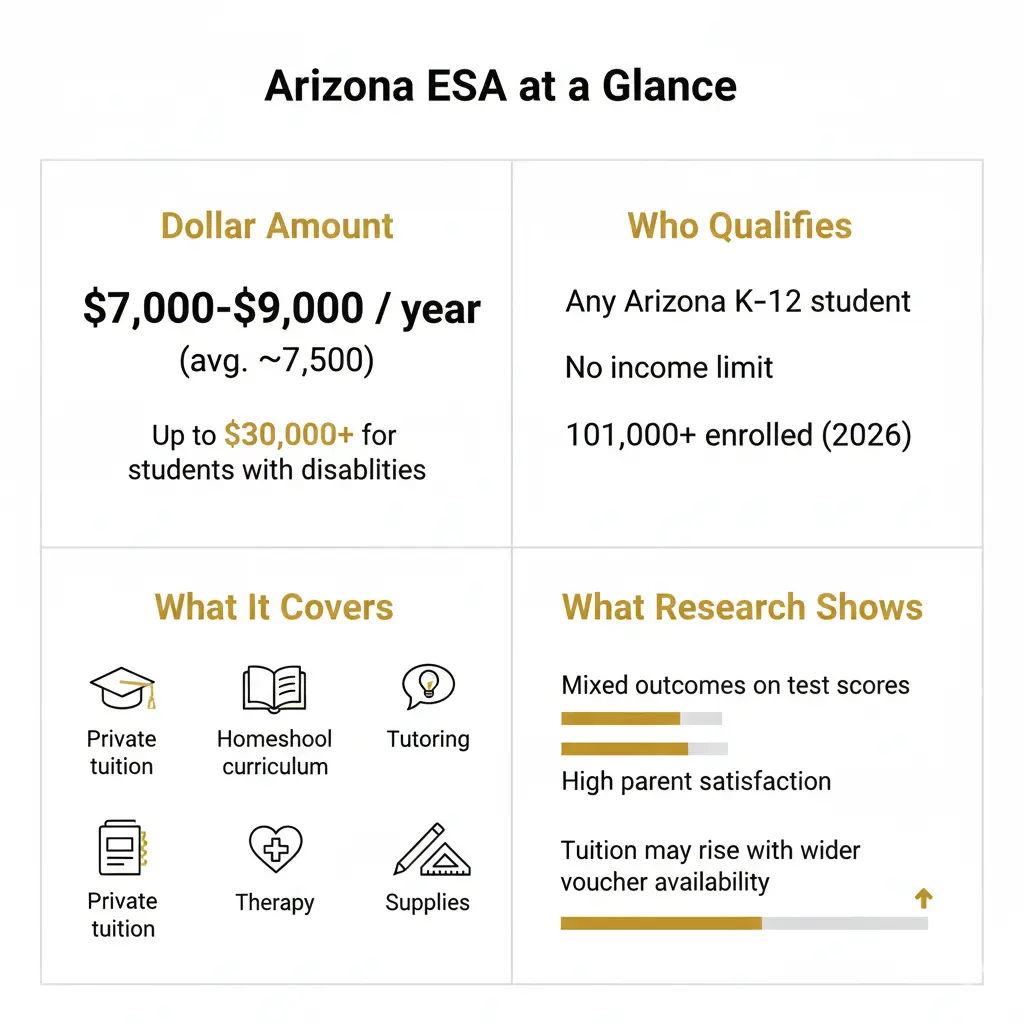
Arizona’s Empowerment Scholarship Account (ESA) program gives eligible families a state-funded account loaded with education dollars. According to the Arizona Department of Education, the average award is approximately $7,500 per student per year, but the range is wide. Most families receive between $7,000 and $8,000, while students with documented disabilities can receive significantly more, sometimes exceeding $30,000 annually.
The amount isn’t arbitrary. The ESA is set at 90% of the state funding that would have otherwise been allocated to the school district for that student. Think of it as the education dollars that would have followed your child to a public school, redirected to you instead.
As of February 2026, more than 101,000 Arizona students are enrolled in the ESA program, a number that has grown nearly tenfold since 2022, when the program became open to every Arizona family regardless of income.
What Can You Actually Spend It On?
The ESA is flexible. Approved uses include:
- Private school tuition (the most common use)
- Homeschool curriculum and materials
- Tutoring and specialized instruction
- Therapies for students with special needs
- Educational technology and supplies
That flexibility is a genuine benefit, especially for families with children who have learning differences or specialized needs that aren’t well-served in their local school.
What the Research Says (The Honest Version)
Here’s where it gets nuanced, and it’s worth knowing before you decide.
On parent satisfaction: Studies consistently show that parents in school choice programs report higher satisfaction than those in assigned public schools. Choice matters to families, and that’s real.
On academic outcomes: The picture is more complicated. The last decade of achievement studies has shown negative voucher impacts, with more mixed or inconclusive results on graduation and college enrollment rates. A 2023 Brookings Institution review of voucher programs found short-term test score drops in several states, though researchers note these effects varied significantly by program size and design.
On the other side, a review of nearly 190 studies by EdChoice (a school choice advocacy organization) found that 84% of studies showed a positive effect on at least some outcomes, 10% showed no impact, and 6% showed a negative result. It’s worth knowing that the source has a perspective, but the data point still reflects real variability.
Bottom line: Research doesn’t guarantee better or worse outcomes. It suggests that the right school fit for your specific child matters more than the funding mechanism itself.
One Thing That’s Worth Watching
A 2024 study from Brown University’s Annenberg Institute found that when Iowa launched a universal ESA program, private school tuition for eligible kindergarteners increased by 21–25%. Arizona has seen similar dynamics. When a voucher becomes widely available, private schools sometimes raise prices to capture that new funding.
That means the $7,500 you receive might not stretch as far as it sounds, especially at higher-cost private schools where annual tuition can run $12,000–$20,000 or more.
Four Concrete Steps Before You Decide
- Compare the voucher to actual tuition. Request a fee schedule from any private school you’re considering. Include required extras like uniforms, activity fees, and technology.
- Ask about accountability. Arizona ESA-funded private schools are not required to administer the same state assessments as public schools. Ask the school how they measure and share student progress.
- Check eligibility for enhanced funding. If your child has an IEP or documented disability, your voucher amount may be substantially higher. Contact the Arizona Department of Education ESA office directly.
- Visit the school before committing. Parental satisfaction data is clear: feeling heard and choosing deliberately leads to better outcomes for children. No dollar amount replaces a school that genuinely fits your child.
The ESA program is a real option with real trade-offs. The voucher amount is meaningful — but whether it’s the right move depends on your child’s needs, your local school options, and how carefully you evaluate where that money will go.
Moonpreneur is on a mission to disrupt traditional education and future-proof the next generation with holistic learning solutions. Its Innovator Program is building tomorrow’s workforce by training students in AI/ML, Robotics, Coding, IoT, and Apps, enabling entrepreneurship through experiential learning.